Stabiler Stangenvorschub erfordert gerades Stangenmaterial sowie eine passende Führungshülse, Spannzangenbohrung und Führungsbuchse als eine Einheit. BQUQ fertigt Spannzangen in der Klasse 0,005 mm, ISO9001.
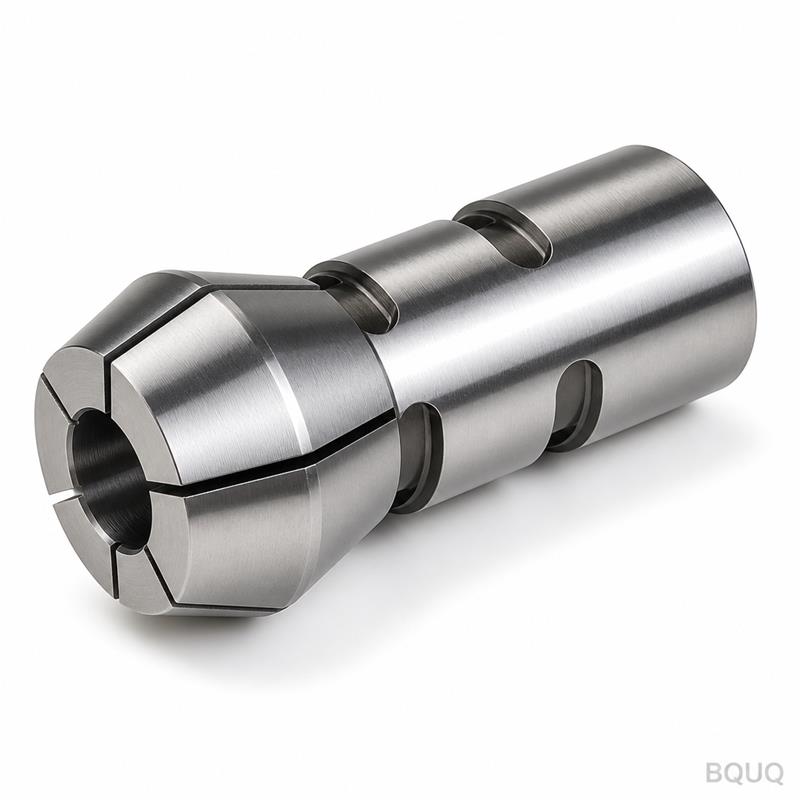
Stangenvorschub und Werkstückspannung: Stabiles Material bei hoher Geschwindigkeit
Präzision beim Stangenvorschub beginnt vor dem ersten Schnitt: Die Stange muss gerade, zentriert und vibrationsfrei in der Spannzange ankommen. Das bedeutet, dass die Führungshülse des Stangenvorschubs, die Spannzangenbohrung und – bei Swiss-Maschinen – die Führungsbuchse auf die Stange abgestimmt und als eine Einheit gewartet werden müssen. Eine stabile Stange ist eine gerade, gut geführte Stange; Instabilität am Vorschub äußert sich in Längenstreuung, Rattern und Rundlaufabweichung an der Spindel.
Bei einer Automaten- oder Swiss-Drehmaschine ist die Stange gleichzeitig Werkstück, Vorschubsystem und Strukturelement. Sie wird im selben Zyklus geschoben, gespannt, gedreht und geschnitten, und jedes Element, das sie berührt, hinterlässt Spuren am Bauteil. Betriebe, die den Stangenvorschub als reines Transportproblem behandeln – einfach das Material zur Spindel bringen – verbringen ihre Tage damit, Rattern und Längenabweichungen zu bekämpfen, die die Vorschubkette selbst verursacht hat. Dieser Artikel führt durch die Kette vom Stangenlager bis zur Spannzangennase.
Die Vorschubkette: Ein System, fünf Elemente
Von hinten nach vorne durchläuft die Stange bei einer Stangenmaschine eine Abfolge von Bohrungen: die Führungshülse des Vorschubrohrs, den Vorschubfinger oder -schieber (bei Nockenautomaten), die Spindel- oder Hauptspindel-Spannzange und bei Swiss-Maschinen die Führungsbuchse an der Bearbeitungszone. Jedes Element muss die Stange freigeben, führen und – im Fall der Spannzange – greifen. Jedes ist ein Verschleißpunkt.
Die Logik der Kette ist einfach: Die Stange kann nur so gerade und stabil sein wie das schwächste Element, das sie durchläuft. Eine verschlissene Führungshülse lässt die Stange zwischen Vorschub und Spindel durchhängen und schlagen. Ein Vorschubfinger, der ungleichmäßig greift, drückt die Stange schief in die Spannzange. Eine Spannzangenbohrung, die für die Stange zu weit ist, lässt sie im Griff klappern. Eine verschlissene Führungsbuchse lässt die Stange genau dort ausweichen, wo die Werkzeuge schneiden.
| Element | Aufgabe | Ausfallerscheinung |
|---|---|---|
| Führungshülse (Vorschub) | Stange entlang ihrer Länge stützen | Durchhängen, Schlagen, Geräusche |
| Vorschubfinger/-schieber | Stange zwischen den Zyklen vorschieben | Ungleichmäßiger Vorschub, Längenstreuung |
| Spindel-/Hauptspindel-Spannzange | Stange greifen und drehen | Durchrutschen, Rundlaufabweichung am Griff |
| Führungsbuchse (Swiss) | Stange an der Bearbeitungszone stützen | Rattern, Maßabweichung bei langen Teilen |
| Stange selbst | Das Werkstück sein | Schlagen, Biegen, Vorschubprobleme |
Stangengeradheit und Toleranz: Die Ursache
Kein Vorschubsystem behebt eine schlechte Stange. Stangenmaterial, das gewickelt, gebogen oder mit einem verbogenen vorderen Ende ankommt, schlägt beim Drehen, und die Schlagamplitude wächst mit der ungestützten Länge und der Drehzahl. Die erste Verbesserung beim Stangenvorschub ist keine Hardware – es ist die Spezifikation von geradem, toleranzkonstantem Stangenmaterial und die Prüfung des vorderen Endes jeder neuen Stange, bevor sie zugeführt wird.
Die Stangentoleranz interagiert mit jeder Bohrung in der Kette. Übermaßige Stangen klemmen in der Führungshülse oder Spannzange; untermäßige Stangen klappern und greifen ungleichmäßig. Für Rundstangen ist eine gute gezogene Qualität oder besser der praktische Ausgangspunkt für Spannzangenarbeit, und der Stangendurchmesser sollte innerhalb des Arbeitsluftspiels jeder Bohrung liegen, die er durchläuft. Wenn die Stange entlang ihrer Länge variiert – gezogene Stange ist selten perfekt rund oder gerade – greift die Spannzange verschiedene Abschnitte unterschiedlich, und die Fertigmaße folgen.
| Stangenzustand | Auswirkung auf die Werkstückspannung | Behebung |
|---|---|---|
| Verbiegtes vorderes Ende | Lässt sich nicht zuführen, klemmt in der Führungshülse | Ende richten oder abschneiden |
| Bundkrümmung / Bogen | Schlagen bei Drehzahl | Gerichtetes Stangenmaterial |
| Durchmesser übermaßig | Klemmen in Spannzange oder Führungshülse | Qualität prüfen; Stangen sortieren |
| Durchmesser untermäßig | Klappern, ungleichmäßiges Greifen | Qualität prüfen; engere Führungshülse |
| Oberflächenzunder/Schmutz | Bohrungsverschleiß, Griffschlupf | Sauberes, gezogenes Stangenmaterial spezifizieren |
Kernerkenntnis: Die Stangenqualität ist ein Parameter der Werkstückspannung. Kaufen Sie Stangenmaterial, als wäre es eine Maschinenkomponente, denn wenn es die Spannzange erreicht, ist es eine.
Dimensionierung der Kette: Führungshülse, Spannzange, Buchse
Jede Bohrung in der Kette ist auf die Stange mit einem Luftspiel ausgelegt – aber das richtige Luftspiel unterscheidet sich je nach Funktion. Die Luftspiele von Führungshülse und Schieber sind großzügig: Sie führen, nicht greifen, und müssen Stangengeradheitsabweichungen ohne Klemmen tolerieren. Die Spannzangenbohrung ist eng: Sie greift, und ihr Arbeitsluftspiel wird in Hundertstel Millimetern gemessen. Die Führungsbuchse liegt dazwischen: eng genug, um die Stange gegen Schnittkräfte zu stützen, lose genug, um Drehung und Vorschub ohne Fressen zu ermöglichen.
Passen Sie die Größen an, wenn Sie eine neue Stangengröße einrichten: Führungshülsenbohrung über dem Stangennennmaß, Spannzangenbohrung am Stangennennmaß mit Arbeitsluftspiel, Buchsenbohrung nahe dem Stangennennmaß mit Laufspiel. Wenn die Elemente von verschiedenen Lieferanten stammen, geben Sie das tatsächlich gemessene Stangenmaß – nicht das Nennmaß – an den Hersteller jedes Elements weiter, denn eine tatsächliche Stange von 6,05 mm in einer Spannzangenbohrung von 6,00 mm ist eine andere Diskussion als eine Nennstange von 6,00 mm.
| Kettenelement | Luftspielzweck | Typische Beziehung zur Stange |
|---|---|---|
| Führungshülse (Vorschub) | Führen, kein Klemmen | Stange + 0,5–1,0 mm typisch |
| Vorschubfinger/-schieber | Schieben ohne Riefen | Nahe an der Stange, Federgriff |
| Spannzangenbohrung | Greifen auf Mitte | Stangennennmaß + 0,01–0,05 mm typisch |
| Führungsbuchse | Stützen, Drehung ermöglichen | Stange + ca. 0,005–0,02 mm typisch |
Behandeln Sie die Zahlen als typische Ausgangspunkte – Stangenmaterial, Maschinendrehzahl und Teiletoleranz verschieben sie alle. Die Disziplin, die zählt, ist, dass jede Bohrung bewusst dimensioniert ist, nicht vom letzten Auftrag übernommen wird.
Vibration und Schlagen bei Drehzahl
Stangenschlagen ist die Hochgeschwindigkeits-Ausfallart: Wenn die Spindeldrehzahl steigt, beginnt eine lange ungestützte Stange zwischen Vorschub und Spannzange sich zu biegen und zu wirbeln, was die Maschine erschüttert und den Schnitt moduliert. Die klassischen Lösungen sind Stützung und Länge. Ein Stangenvorschub mit geeigneter Führungshülse stützt die Stange entlang ihrer Länge. Die Überhanglänge der Stange zwischen Vorschub und Spannzange kurz zu halten – einige Maschinen verwenden eine Lünette oder ein Stangenstützrohr – erhöht die Drehzahl, bei der das Schlagen beginnt.
Bei Swiss-Maschinen übernimmt die Führungsbuchse die Schlagunterdrückung: Die Stange ist am Schnitt gestützt, sodass ihre freie Länge nur das ist, was über die Buchse hinausragt, und die Bearbeitung erfolgt an diesem kurzen, steifen Abschnitt. Das ist der strukturelle Grund, warum Swiss-Maschinen schlanke Teile bei Drehzahlen halten, bei denen eine Maschine mit festem Spindelstock rattern würde. Unser Vergleich Nockenautomat vs. Swiss und der Leitfaden zu Swiss-Spannzangensystemen behandeln die Architektur im Detail.
Verschleiß: Die Kette altert gemeinsam
Die Vorschubkette verschleißt gemeinsam und sollte gemeinsam inspiziert werden. Die Führungshülse verschleißt dort, wo die Stange schleift, der Vorschubfinger an seinem Griff, die Spannzangenbohrung im Greifbereich und die Buchse dort, wo die Stange unter Last gleitet. Jedes verschleißt unterschiedlich schnell – die Buchse normalerweise am schnellsten bei einer Swiss-Maschine, die Führungshülse am langsamsten – aber das Symptom ist gemeinsam: Die Stange verliert an Stützung und die Teile weichen ab.
Integrieren Sie die Kette in den Wartungsplan aus unserem Leitfaden zur Spannzangenwartung: Reinigen Sie die Bohrungen im Schichttakt, prüfen Sie den Verschleiß von Führungshülse und Buchse im Kalendertakt und verfolgen Sie die Teiledurchmesser als Gesundheitsmonitor der Kette. Wenn Rattern oder Längenstreuung auftritt, prüfen Sie die gesamte Kette, nicht nur die Spannzange – das Ersetzen einer neuen Spannzange vor einer verschlissenen Buchse behebt nichts.
Einrichtung für eine neue Stangengröße
Die Einrichtungssequenz für eine neue Stangengröße: Messen Sie die tatsächliche Stange, dimensionieren Sie Führungshülse und Schieber darauf, passen Sie die Spannzangenbohrung an, stellen Sie die Buchse ein (Swiss), und beweisen Sie dann die Kette mit einem Probelauf – Vorschub, Griff, Schnitt, und prüfen Sie Durchmesser und Länge bei Drehzahl. Der Probelauf ist wichtig, weil sich das Luftspielverhalten nur unter Drehung und Schnittlast zeigt; eine Kette, die sich von Hand gut anfühlt, kann bei Betriebsdrehzahl dennoch schlagen.
Mischen Sie keine Stangengrößen durch eine Spannzange: Eine Spannzange ist größen spezifisch, und eine Stange, die einige Hundertstel unter der Bohrung liegt, greift am Rand ihres Fensters. Wenn die Produktion häufig die Größen wechselt, kennzeichnen Sie die Kettenelemente nach Größe, sodass der Wechsel ein Tausch ist, keine Neukonstruktionssitzung. BQUQ fertigt das Spannzangenende dieser Kette – Automatendreh-Spannzangen in den Familien 36/46/52/60/630/643, Swiss- und 2J-Spannfutter sowie führungsbuchsenkompatible Bohrungen, geschliffen in der Klasse 0,005 mm unter ISO9001-Kontrolle. Siehe das Sortiment an Automatendreh-Spannzangen und die Swiss- und 2J-Spannfutter, und senden Sie die Maschinen- und Stangendetails an sc@bquq.com für ein Angebot innerhalb von 12 Arbeitsstunden.
Häufig gestellte Fragen
F: Warum rattern meine Stangenmaschinen nur bei langen Teilen?
A: Lange ungestützte Stangen schlagen zwischen Vorschub und Spannzange, wenn die Drehzahl steigt. Stützen Sie die Stange mit einer geeigneten Führungshülse, verkürzen Sie den Überhang oder wechseln Sie zu einer Swiss-Maschine, bei der die Führungsbuchse die Stange am Schnitt stützt.
F: Wie eng sollte die Bohrung der Führungsbuchse sein?
A: Nahe an der Stange – typischerweise Stangennennmaß plus einige Mikrometer Laufspiel – sodass sie die Stange gegen Schnittkräfte stützt, aber dennoch Drehung und Vorschub ermöglicht. Zu eng klemmt; zu lose lässt die Stange an den Werkzeugen ausweichen.
F: Kann eine Spannzange Stangen mit variierender Größe handhaben?
A: Nur innerhalb ihres kleinen Greiffensters. Stangen, die um mehr als einige Hundertstel Millimeter variieren, greifen ungleichmäßig und erzeugen Durchmesserstreuung. Halten Sie die Stange innerhalb der Qualität oder sortieren Sie sie, und dimensionieren Sie jedes Kettenelement auf die tatsächliche Stange.
F: Was verschleißt zuerst in der Vorschubkette?
A: Bei Swiss-Maschinen normalerweise die Führungsbuchse, weil die Stange unter voller Schnittlast durch sie gleitet. Bei Nockenautomaten teilen sich Spannzangenbohrung und Vorschubfinger den Verschleiß. Inspizieren Sie die Kette gemeinsam – ein einzelnes verschlissenes Element destabilisiert die Stange.
F: Spielt die Stangengeradheit wirklich eine Rolle, wenn die Spannzange sie greift?
A: Ja. Die Spannzange greift nur dort, wo sie Kontakt hat; eine gebogene Stange wird an der Nase gehalten, schlägt aber dahinter, und das freie Ende läuft unabhängig von der Spannzangenqualität aus. Gerade Stange ist die kostengünstigste Stabilitätsverbesserung beim Stangenvorschub.
Verfasst vom BQUQ-Ingenieurteam. BQUQ ist eine ISO9001-zertifizierte Quellenfabrik in Dongguan, China, die CNC-Bearbeitung, Metallstanzen, kundenspezifische Federn, Kühlkörper und Spannzangenlinien unter einem Dach betreibt. Senden Sie Zeichnungen an sc@bquq.com oder WhatsApp +86 13713157787 für ein Angebot innerhalb von 12 Arbeitsstunden. www.bquq.com