Typennummern 36/46/52/60/630/643 sind Familiencodes, keine Stangengrößen. BQUQ fertigt Automatendreh-Spannzangen in der Klasse 0,005 mm nach ISO9001.
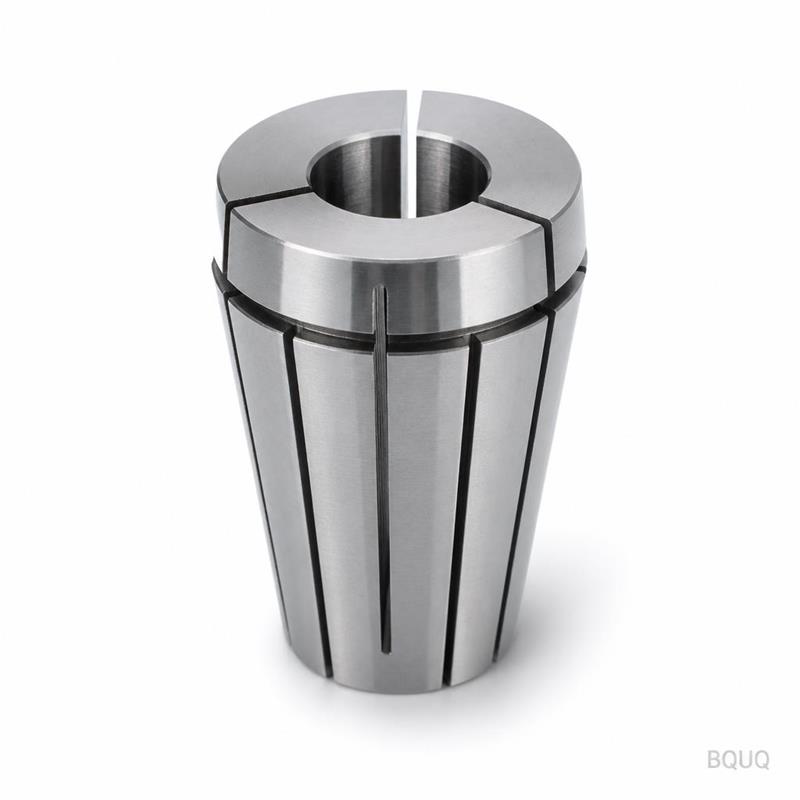
Automatendreh-Futter: Typen, Größen und was die Typennummern bedeuten
Typennummern für Automatendreh-Spannzangen wie 36, 46, 52, 60, 630 und 643 sind Familiencodes, die den Spannzangenkörperdurchmesser, den Kegelwinkel und das Gewinde festlegen, damit die Spannzange in einer Maschinenfamilie korrekt sitzt und zieht – sie geben nicht die Stangengröße an. Sie wählen einen Typ nach Ihrer Maschine und Ihrem Futter, dann die Bohrung nach Ihrem Material. Wenn Sie „eine 52er-Spannzange“ ohne Bohrungsgröße und Gewindeprüfung bestellen, werden falsche Teile geliefert.
Die Verwirrung ist verständlich. Jede Spannzangenzeichnung trägt eine Nummer, und Neulinge lesen sie als Kapazitätsangabe, so wie eine Futtergröße auf den Backenhub hindeutet. Es ist nicht diese Art von Nummer. Ein Tyencode identifiziert die Schnittstelle zwischen der Spannzange und dem Zugrohr oder der Futternase: den Kegel, der sie aufnimmt, das Gewinde, das sie zieht, und den Körperdurchmesser, der sie zentriert. Alles Weitere – die Bohrung, die Spanngeometrie, das Schlitzen – ist eine separate Entscheidung für die jeweilige Stange, die Sie bearbeiten.
Was eine Automatendreh-Spannzange tut
Eine Automatendreh-Spannzange ist das Werkstückhalteelement an einer Kurven- oder CNC-Drehmaschine, das rundes, sechskantiges oder quadratisches Stangenmaterial hält, während die Spindel dreht. Sie sitzt in oder direkt vor der Spindelnase, schließt sich über einen Kegel um das Material und öffnet sich, um die Stange zwischen den Zyklen vorzuschieben.
Die meisten sind Federzangen: eine gehärtete, geschlitzte Hülse mit konischer Nase. Ziehen Sie die Hülse in einen passenden Kegel, lassen die Schlitze die Finger sich um die Stange schließen; schieben Sie sie heraus, springen die Finger auf. Da die Spannkraft über den gesamten Umfang verteilt ist, zentriert eine Spannzange die Stange weit besser als ein Backenfutter, weshalb Präzisionsstangenarbeit in Spannzangen erfolgt.
Die Spannzange ist konstruktionsbedingt ein Verschleißteil. Sie greift, löst und führt tausende Male pro Schicht aus, daher wird sie geschliffen, gehärtet und als Verbrauchswerkzeug behandelt – nicht als Teil der Maschine. Eine Spannzange als dauerhaft zu behandeln, ist die häufigste Ursache für schleichenden Rundlauf an einer sonst guten Drehmaschine.
Das Typnummernsystem: Familiencodes, keine Größen
Jeder Automatendreh-Hersteller und Spannzangen-Nachrüster organisiert Spannzangen in Familien. Der Familiencode – bei Maschinen, die im Handel üblich sind, sind dies die Typen 36, 46, 52, 60, 630 und 643, neben kleineren Codes wie 15 und 25 – bezieht sich auf den Spannzangenkörper und seine Sitzgeometrie. Alle Spannzangen einer Familie teilen den Körperdurchmesser, den Kegelwinkel und das Zuggewinde. Sie unterscheiden sich nur in Bohrung und Schlitzen für die Stangenform.
| Typfamilie | Was der Code festlegt | Was Sie weiterhin angeben müssen |
|---|---|---|
| 36 | Körperdurchmesser, Kegel, Gewinde für diese Maschinenklasse | Bohrungsdurchmesser und -form, Schlitzmuster |
| 46 | Körperdurchmesser, Kegel, Gewinde für diese Maschinenklasse | Bohrungsdurchmesser und -form, Schlitzmuster |
| 52 | Körperdurchmesser, Kegel, Gewinde für diese Maschinenklasse | Bohrungsdurchmesser und -form, Schlitzmuster |
| 60 | Körperdurchmesser, Kegel, Gewinde für diese Maschinenklasse | Bohrungsdurchmesser und -form, Schlitzmuster |
| 630 | Körperdurchmesser, Kegel, Gewinde für diese Maschinenklasse | Bohrungsdurchmesser und -form, Schlitzmuster |
| 643 | Körperdurchmesser, Kegel, Gewinde für diese Maschinenklasse | Bohrungsdurchmesser und -form, Schlitzmuster |
Die Kernaussage ist die zweite Spalte: Ein Typecode erscheint nie in der Bohrungsspezifikation. Zwei 52er-Spannzangen für dieselbe Maschine können eine 6-mm-Stange und eine 12-mm-Stange halten; die Spannzangen sehen von außen gleich aus und sind innen völlig unterschiedlich. Der Code hat nur die Aufgabe, das Äußere – den Sitzkegel und das Gewinde – zu garantieren, das zu Ihrer Spindel passt.
Wenn Sie Ersatzspannzangen für eine bestehende Maschine kaufen, ist die schnellste korrekte Bestellung: Maschinenmarke und -modell, Futter- oder Zugrohrreferenz, die Markierungen der aktuellen Spannzange sowie Stangengröße und -form. Diese Kombination beseitigt alle Vermutungen über die Familie. Eine Fabrik, die täglich Spannzangen bearbeitet, kann dann Familie und Bohrung in einem Austausch bestätigen, anstatt aus einem Bild zu zitieren.
Was die Nummern nicht verraten
Die teuersten Fehler entstehen durch das, was der Typecode offen lässt. Drei Details verursachen fast alle Abweichungen.
Erstens der Kegelwinkel und seine Sitztiefe. Spannzangen derselben Familie von verschiedenen Herstellern können bei gleichem Kegel in leicht unterschiedlichen Tiefen sitzen, da die Länge des Sitzkegels mit der Futternase interagiert. Dies zeigt sich als Rundlauffehler oder als Spannzange, die nur an ihrer Vorderkante sitzt.
Zweitens das Gewinde. Steigung und Durchmesser des Zuggewindes sind familien spezifisch. Eine Spannzange mit dem richtigen Körper, aber dem falschen Gewinde zieht nicht fest an oder kreuzt das Zugrohr. Deshalb ist die Gewindeprüfung wichtiger als die gestempelte Nummer, wenn Sie von einer Zweitquelle kaufen.
Drittens das Schlitzmuster und die Schlitzbreite. Rundstangen-Spannzangen haben typischerweise drei Schlitze, und Polygon-Spannzangen sind so geschlitzt, dass die Ecken gestützt bleiben. Die Schlitzbreite steuert, wie weit sich die Finger schließen können und wie stark sie zurückspringen. Zu breit geschnittene Schlitze für die Bohrungsgröße schwächen die Finger; zu schmal und die Spannzange schließt nicht weit genug, um eine untermaßige Stange zu greifen.
Wie die Spannkraft tatsächlich funktioniert
Der Kegel wandelt den Zug des Zugrohrs in radiale Spannkraft um. Wenn die Spannzange in ihren Sitz gezogen wird, wird die konische Nase nach innen gedrückt. Jeder geschlitzte Finger wirkt wie ein Ausleger, und die Bohrungsoberfläche – normalerweise nach dem Härten geschliffen – überträgt diese Kraft auf die Stange.
Stangengeradheit und Toleranz entscheiden, wie gleichmäßig die Finger belastet werden. Eine gebogene oder übermaßige Stange zwingt einen Finger auf und lässt den gegenüberliegenden Finger kaum berühren, was sich direkt als Werkstück-Rundlauffehler an der Spindel zeigt. Rundmaterial für Spannzangenarbeit sollte gezogen oder geschliffen sein und vor dem Einsatz an der Spindel auf Geradheit geprüft werden.
| Parameter | Typischer Wert (Industrie) | Warum er wichtig ist |
|---|---|---|
| Kegel-Einschlusswinkel | Familien spezifisch, üblich ~10–30° | Setzt Spannkraft vs. Zugrohrhub |
| Bohrungsoberflächengüte | Ra 0,2–0,4 µm geschliffen | Überträgt Spannkraft ohne Stangenmarkierung |
| Spannzangenhärte | 45–58 HRC typisch | Verschleißlebensdauer vs. Schlitzrückfederung |
| Arbeitsspiel, Bohrung zu Stange | ~0,01–0,05 mm typisch | Ermöglicht Stangenvorschub; darf Spannbereich nicht überschreiten |
| Schlitzanzahl | 3 für rund; mehr für Polygonbohrungen | Gleichmäßiges Schließen ohne Eckenquetschen |
Die obigen Werte sind typische Bereiche in der Branche, nicht die Spezifikation eines einzelnen Herstellers. Die Zeichnung Ihres Spannzangenlieferanten ist maßgeblich für die genauen Familienwerte.
Der praktische Effekt: Eine korrekt dimensionierte Spannzange hält Rundstangen mit einem Gesamtindikator-Rundlauf im niedrigen Mikrometerbereich an der Nase, weshalb Automaten und Schweizer Drehmaschinen Toleranzen halten, die Backenfutter nicht erreichen. Wenn Sie den vollständigen Vergleich von Spannzangen gegenüber Backenfuttern wünschen, zeigt unser Artikel Spannzangen vs. Backenfutter die Zahlen.
Größen: Die Bohrung kommt zuletzt
Die Größenauswahl erfolgt in drei Schritten: zuerst die Maschinenfamilie (ergibt die Typnummer), dann die Futter- oder Zugrohrbestätigung (ergibt Kegel und Gewinde), dann die Bohrung passend zur Stange.
Bohrung = Stangenform plus Stangenmaß. Rundstangen verwenden den Nenndurchmesser; Sechskantstangen das Schlüsselmaß; Vierkantstangen ebenfalls das Schlüsselmaß. Die Bohrung wird auf die Stangengröße mit einem kleinen Arbeitsspiel geschnitten, damit die Stange durchlaufen kann, aber klein genug, dass die Finger noch greifen, bevor sie auf Grund laufen. Das ist das Fenster, das eine Spannzangen-Größentabelle dokumentiert – lesen Sie die Tabellen nach Stangengröße, niemals nur nach Maschinenname.
Da die korrekte Bohrung nahe am Stangenmaß liegt, ist eine Spannzange praktisch größen spezifisch. Eine 46er-Spannzange hält nicht „6 bis 12 mm Stange“. Wenn Ihre Produktion mehrere Stangengrößen umfasst, benötigen Sie mehrere Bohrungen in dieser Familie. Das ist normal und der Grund, warum Spannzangensätze nach Bohrungsleiter und nicht nach Maschine organisiert sind.
Bestellung bei einer Spannzangenfabrik
Eine vollständige Spannzangenanfrage ist kurz, aber präzise. Senden Sie: den Maschinentyp und den Spannzangen-Familiencode, falls bekannt, die Futter- oder Zugrohrgewindereferenz, das Stangenmaterial, die Form und das Nennmaß mit Toleranzklasse sowie die Rundlaufklasse, die Sie für das Fertigteil benötigen.
Das sind die Informationen, die wir bei BQUQ vor der Angebotserstellung für Automatendreh-Spannzangen anfordern, weil es dieselben Informationen sind, die unsere CNC-Linie benötigt, um den Rohling zu bearbeiten, die Bohrung zu schleifen und die Schlitze in der richtigen Reihenfolge zu schneiden. Wir fertigen Federzangen für die Familien 36/46/52/60/630/643 aus gehärtetem Legierungs- und Federstahl auf Drehmaschinen, die in der Produktion ±0,005 mm halten, unter ISO9001-Prozesskontrolle. Senden Sie die Maschinendetails und die Stangenspezifikation an sc@bquq.com und Sie erhalten einen Preis innerhalb von 12 Arbeitsstunden. Unser Automatendreh-Federzangen-Sortiment zeigt die Familien, und wenn Sie auch die Futterseite benötigen, bauen wir Schweizer und 2J-Spannzangenfutter in derselben Fabrik.
Häufig gestellte Fragen
F: Gibt die Typnummer auf einer Spannzange die maximale Stangengröße an?
A: Nein. Die Nummer legt den Spannzangenkörper, den Kegel und die Gewindefamilie fest, damit sie in eine Maschinenklasse passt. Die Stangenkapazität kommt von der Maschine und dem Futter, und die Bohrung wird pro Stangengröße geschnitten. Geben Sie bei der Bestellung immer sowohl den Typ als auch die Bohrung an.
F: Kann eine 46er-Spannzange in ein 52er-Futter passen?
A: Nur wenn Sitzkegel, Körperdurchmesser und Gewinde identisch sind, was normalerweise nicht der Fall ist. Unterschiedliche Typecodes existieren, weil die Schnittstellen unterschiedlich sind. Der Versuch, eine falsche Familie zu erzwingen, riskiert eine festsitzende Spannzange oder ein beschädigtes Zugrohr.
F: Warum gibt es Federzangen in runden und Polygon-Bohrungsversionen?
A: Die Bohrung kopiert den Stangenquerschnitt. Runde Spannzangen greifen Rundstangen rundum; Sechskant- und Vierkantbohrungen sind geschlitzt, damit die flachen Ecken gestützt bleiben und das Material nicht gequetscht wird. Passen Sie die Bohrungsform an die Stangenform an, sonst leidet die Spannkraft.
F: Was verschleißt zuerst an einer Automatendreh-Spannzange?
A: Die Bohrung und der Sitzkegel. Bohrungsverschleiß zeigt sich als Rutschen oder einen leicht größeren Fertigdurchmesser; Kegelverschleiß zeigt sich als Rundlauffehler, der nach der Reinigung bestehen bleibt. Beides ist messbar, und beides rechtfertigt den Austausch, wenn die Teiletoleranz zu driften beginnt.
F: Was sollte ich für ein schnelles Spannzangenangebot senden?
A: Maschinenmarke und -modell, die Futter- oder Zugrohrgewindereferenz, Stangenmaterial und -form mit Nennmaß und Toleranz sowie die erforderliche Rundlaufklasse. BQUQ bietet auf Basis dieser Daten innerhalb von 12 Arbeitsstunden an – senden Sie es an sc@bquq.com oder WhatsApp +86 13713157787.
Verfasst vom BQUQ Engineering Team. BQUQ ist eine ISO9001-zertifizierte Quellenfabrik in Dongguan, China, die CNC-Bearbeitung, Metallstanzen, kundenspezifische Federn, Kühlkörper und Spannzangenlinien unter einem Dach betreibt. Senden Sie Zeichnungen an sc@bquq.com oder WhatsApp +86 13713157787 für ein Angebot innerhalb von 12 Arbeitsstunden. www.bquq.com