Geschlitzte Spannzangen spannen einen Größenbereich und zentrieren präzise; Vollspannzangen spannen eine Größe mit maximaler Steifigkeit. BQUQ fertigt beide in der Klasse 0,005 mm, ISO9001.
Spannzangen mit Schlitzen vs. Vollspannzangen: Spannbereich und Präzisionsabwägungen
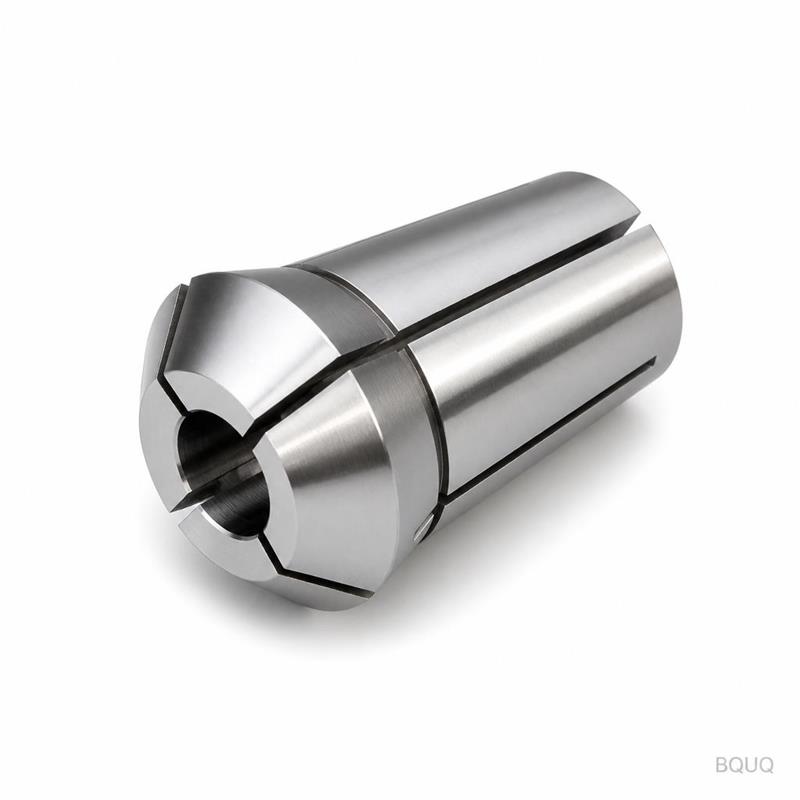
Eine geschlitzte Spannzange ist eine geschlitzte Hülse, die sich über einen kleinen Bereich von Stangengrößen schließt und das Material außergewöhnlich gut zentriert; eine Vollspannzange hat keine Schlitze, spannt exakt eine Größe und bietet maximale Steifigkeit auf Kosten von null Toleranz. Wählen Sie geschlitzt, wenn Sie Zentrierung, schnellen Wechsel und Toleranz gegenüber geringfügigen Stangenabweichungen benötigen; wählen Sie massiv, wenn die Aufgabe absolute Steifigkeit erfordert und das Material nie variiert.
Die beiden Konstruktionen liegen an entgegengesetzten Enden desselben Spektrums. Beide sind Präzisionsspannmittel für rundes, sechskantiges oder profiliertes Material auf Drehmaschinen und Schleifmaschinen. Beide übertragen das Spindeldrehmoment über einen vollständigen ringförmigen Kontakt – das macht Spannzangen besser als Backenfutter. Aber der Schlitz, der einer geschlitzten Spannzange ihre Flexibilität verleiht, setzt ihr auch Grenzen, und der ununterbrochene Ring einer Vollspannzange erkauft Steifigkeit mit dem Verlust an Anpassungsfähigkeit. Das Verständnis dieses Kompromisses ist das gesamte Auswahlproblem.
Was sie unterscheidet
Die geschlitzte Spannzange, auch Spreizspannzange genannt, ist eine gehärtete Hülse mit Längsschlitzen, die teilweise von der Nase aus eingeschnitten sind. Wird sie in einen konischen Sitz gezogen, biegen sich die geschlitzten Finger nach innen und klemmen das Material. Wird die Zugkraft aufgehoben, öffnet die Federwirkung der Finger die Spannzange für den Stangenvorschub oder die Teileentnahme.
Die Vollspannzange ist ein schlichter gehärteter Ring, auf die Stangengröße ausgebohrt, ganz ohne Schlitze. Sie kann sich nicht schließen: Das Material sitzt gleitend oder im Presssitz darin, und das Spannen ist eine reine Funktion der ununterbrochenen Steifigkeit des Rings und der Präzision der Bohrung. „Massiv“ bedeutet hier, dass das Spannelement selbst ungeschlitzt ist; das Futter dahinter liefert weiterhin die Spannkraft.
| Eigenschaft | Geschlitzte (Spreiz-)Spannzange | Vollspannzange |
|---|---|---|
| Spannbereich auf den Durchmesser | ~0,05–0,2 mm typisch, größenabhängig | Keiner – exakt eine Größe |
| Zentrierwiederholgenauigkeit | Sehr hoch (typisch im Mikrometerbereich) | Sehr hoch, begrenzt durch die Bohrungspassung |
| Radiale Steifigkeit | Durch Schlitze leicht reduziert | Maximal, keine Schlitze zum Durchbiegen |
| Erforderliche Materialtoleranz | Moderat; gleicht kleine Abweichungen aus | Eng; Material muss zur Bohrung passen |
| Markierung auf weichem Material | Geringes Risiko bei korrekten Schlitzkanten | Geringstes Risiko |
| Typische Verwendung | Stangenvorschubautomaten, Swiss-Type-Drehmaschinen | Schleifen, Kurzserien-Präzision, Master |
Behandeln Sie den Spannbereich als typische Richtlinie, nicht als Garantie: Er hängt von Bohrungsgröße, Schlitzanzahl und Kegelwinkel ab. Der Mechanismus ist jedoch universell – Schlitze müssen sich biegen, damit eine geschlitzte Spannzange funktioniert, und genau diese Biegung ist die gesamte Quelle ihrer Größentoleranz.
Spannbereich: Der ganze Vorteil der geschlitzten Spannzange
Eine geschlitzte Spannzange schließt sich um das, was sich darin befindet, innerhalb des Weges, den ihre Schlitze erlauben. Dieser Weg ist bewusst klein – einige Hundertstel Millimeter bei kleinen Bohrungen, etwas mehr bei großen. Klein ist der Punkt: Ein flaches Schließen hält die Finger in ihrem elastischen Bereich, sodass sich die Spannzange wieder öffnet, und hält die Bohrungsgeometrie unter Last rund.
Dieser Bereich leistet in der Produktion echte Arbeit. Stangenmaterial hat Toleranz, Geradheitsfehler und ein wenig thermisches Wachstum; eine geschlitzte Spannzange absorbiert diese Schwankungen und präsentiert das Material dennoch zentriert. Sie ermöglicht es dem Bediener auch, die Stange zwischen den Zyklen vorzuschieben und an einem frischen Abschnitt derselben Stange neu zu spannen – das ist der tägliche Rhythmus einer Automatendrehmaschine.
Der Preis für den Bereich ist, dass das Spannen an den Extremen ein Kompromiss ist. Am unteren Ende des Bereichs schließen sich die Finger mehr und die Spannkraft pro Finger steigt ungleichmäßig; am oberen Ende schließt sich die Spannzange kaum, bevor sie stoppt. Für eine gegebene Bohrung sollte das Material nahe der Mitte des Fensters liegen. Deshalb veröffentlichen Spannzangenhersteller Diagramme mit empfohlener Stangentoleranz pro Bohrung – bleiben Sie innerhalb des Fensters und der Rundlauf bleibt gering.
Präzision: Wo beide Konstruktionen gewinnen – und verlieren
Zentrierung ist die gemeinsame Stärke. Da die Bohrung nach dem Härten geschliffen wird und das Spannen den vollen Umfang umschließt, zentrieren beide Spannzangentypen das Material weitaus besser als ein Backenfutter, dessen Backen die Kraft auf drei oder sechs Punkte lokalisieren. Der Gesamtindikator-Rundlauf an der Nase liegt bei einer guten Spannzange und einer echten Spindel typischerweise im niedrigen Mikrometerbereich.
Der Unterschied zeigt sich unter Last. Eine Vollspannzange hat keine Finger, die ausweichen könnten, also widersteht sie radialen Schnittkräften mit dem vollen Ringquerschnitt. Die Schlitze einer geschlitzten Spannzange erzeugen lokale Nachgiebigkeit; bei schweren unterbrochenen Schnitten können sich die Finger genug biegen, um das Material um einen Bruchteil eines Mikrometers zu bewegen. Bei leichten Schlichtschnitten ist der Unterschied unsichtbar. Beim Schruppen, Schleifen und Hartdrehen entscheidet er über die Oberflächenqualität.
| Arbeitsbedingung | Bessere Wahl | Grund |
|---|---|---|
| Stangenvorschub-Automatenproduktion | Geschlitzt | Vorschub, Freigabe und erneutes Spannen automatisch |
| Einzelgröße, hohe Stückzahl, leichte Schnitte | Beides | Geschlitzt bietet Komfort ohne Nachteil |
| Schleifen kleiner Wellen | Massiv bevorzugt | Kein Schlitzdurchbiegen unter Schleifscheibendruck |
| Schweres Schruppen von Stangenmaterial | Massiv bevorzugt | Maximale Steifigkeit pro Spannung |
| Häufige Größenwechsel | Geschlitzt | Eine Körperfamilie, nur Bohrung wechseln |
Das Muster ist konsistent: Wo das Teil stationär ist und der Schnitt schwer, verdienen Vollspannzangen ihre Steifigkeit; wo sich Material bewegt und Zyklen wiederholen, verdienen geschlitzte Spannzangen ihren Bereich. Beachten Sie, dass bei Automatendrehmaschinen der massive Ring normalerweise das Dicht-/Vorschubelement oder ein Master ist, während die geschlitzte Spannzange das eigentliche Spannen übernimmt – die beiden ergänzen sich so oft, wie sie konkurrieren.
Rückzug, Ausstoß und Festlänge: Der Effekt der Zugstange
Die Flexibilität der geschlitzten Spannzange interagiert mit ihrer Betätigung, weshalb das Thema immer zusammen mit dem Zugstangendesign auftaucht. Bei einem Rückzugsystem wird die Spannzange in den Kegel gezogen, was das gespannte Material leicht mit nach hinten zieht; bei einem Festlängensystem gleitet die Spannzange auf einer Hülse, sodass sich die Materialposition beim Spannen nicht verschiebt. Wenn Ihre Teile von Zyklus zu Zyklus Längenabweichungen zeigen, liegt die Lösung normalerweise in der Betätigung, nicht in der Spannzange – wir behandeln die Mechanik in Festlängen- vs. Rückzugspannzangen.
Bei der Vollspannzange verschwindet diese Frage größtenteils: Eine Vollspannzange kann nicht geschlossen gezogen werden, da sie keine Schlitze hat, also wird sie durch einen externen Mechanismus gespannt und die Materialposition wird durch die Bohrungspassung bestimmt. Deshalb dominieren Vollspannzangen Schleifvorrichtungen, bei denen das Teil in jedem Zyklus an einer festen axialen Position sitzen muss.
Was die Rundlaufspezifikation wirklich verspricht
Beide Typen werden mit einer Rundlauf- oder Konzentrizitätsklasse verkauft, und die Zahl bedeutet nur etwas, wenn Sie wissen, was gemessen wurde. Eine Spannzange mit dem Stempel „Klasse 0,005 mm“ bedeutet typischerweise die Konzentrizität der Bohrung zum Sitzkegel, gemessen an einem Master, in dieser Klasse. Es bedeutet nicht, dass Ihr fertiges Teil 0,005 mm TIR läuft – Spindelstock-Rundlauf, Futtersitz, Zugstangenkraft und Stangengeradheit addieren sich alle dazu.
Verwenden Sie die Spannzangenspezifikation als Komponentenbudget, nicht als Versprechen für das fertige Teil. Weisen Sie einen Teil Ihrer Teiletoleranz der Spannzange zu, einen Teil der Spindel, und prüfen Sie die Baugruppe an der Maschine mit einer Messuhr. Wenn Sie die Disziplin hinter Rundlaufklassen benötigen, erklärt unser Artikel Präzisionsspannzangen-Klassen, was jede Klasse abdeckt und wie Sie sie verifizieren.
Auswahl für Ihre Maschine
Passen Sie den Typ an den Maschinenzyklus an, nicht an Gewohnheit. Automaten- und Swiss-Type-Drehmaschinen sind auf geschlitzte Spannzangen ausgelegt: Sie führen Stangenmaterial zu, spannen und lösen tausende Male am Tag, und Festlängenvarianten halten die Teillänge. Schleifmaschinen, Hartdreh-Setups und Einzweckvorrichtungen sind auf Vollspannzangen ausgelegt: Das Teil wird einmal geladen, der Schnitt ist schwer, und Steifigkeit ist alles.
Wenn Sie kaufen, geben Sie die Maschinenfamilie, die Stangengröße und -form, die Toleranzklasse des Materials und die Rundlaufklasse an, die das fertige Teil benötigt. Für geschlitzte Spannzangen nennen Sie die Typfamilie (36, 46, 52, 60, 630, 643) und den Betätigungsstil, damit Kegel und Gewinde zur Zugstange passen. BQUQ fertigt sowohl geschlitzte Spannzangen als auch massive Konstruktionen aus gehärtetem Legierungs- und Federstahl, mit Bohrungen, die auf die Klasse 0,005 mm auf derselben CNC-Linie unter ISO9001-Kontrolle geschliffen werden – stöbern Sie im Sortiment für Automatendrehspannzangen oder den Swiss- und 2J-Spannzangenfuttern, in die sie montiert werden, und senden Sie die Maschinendetails für ein Angebot innerhalb von 12 Arbeitsstunden.
Häufig gestellte Fragen
F: Kann eine Vollspannzange mehr als eine Stangengröße spannen?
A: Nein. Ohne Schlitze kann sie sich nicht schließen, also muss die Bohrung zum Material passen. Wenn die Stange um mehr als ein paar Mikrometer variiert, verwenden Sie eine geschlitzte Spannzange mit ausreichend Spannbereich oder schleifen Sie das Material auf eine engere Klasse.
F: Warum haben geschlitzte Spannzangen eine bessere Zentrierung als Backenfutter?
A: Die Bohrung umschließt den vollen Umfang und ist konzentrisch zum Sitzkegel geschliffen, sodass die Spannkraft gleichmäßig verteilt wird. Backenfutter lokalisieren die Kraft an den Backen und fügen Hebelarm-Durchbiegung hinzu, was den Rundlauf bei kleinen Durchmessern erhöht.
F: Wann verursacht der Spannbereich einer geschlitzten Spannzange Probleme?
A: Wenn das Material an den Extremen des Fensters sitzt: Überdimensionales Material öffnet einen Schlitz ungleichmäßig, unterdimensionales Material lässt die Finger an ihrem Anschlag ohne echten Halt. Halten Sie die Stangentoleranz innerhalb des vom Hersteller empfohlenen Bereichs.
F: Sind Vollspannzangen genauer als geschlitzte Spannzangen?
A: An der Bohrung können beide auf dieselbe Klasse geschliffen werden. Vollspannzangen unterscheiden sich in der Steifigkeit: Keine Schlitze bedeutet keine Durchbiegung unter Last, also halten sie die Genauigkeit bei schweren Schnitten und beim Schleifen besser, wo geschlitzte Spannzangen ausweichen können.
F: Welche ist günstiger in der Wartung?
A: Geschlitzte Spannzangen sind das höher verschleißende Teil, da sie ständig biegen; prüfen Sie Schlitze auf Risse und Bohrung auf Verschleiß. Vollspannzangen halten, bis die Bohrung verschleißt oder die Teilpassung locker wird. Die Ersatzkosten sind ähnlich – beide sind präzisionsgeschliffene Verschleißteile.
Verfasst vom BQUQ Engineering Team. BQUQ ist eine ISO9001-zertifizierte Quellenfabrik in Dongguan, China, die CNC-Bearbeitung, Metallstanzen, kundenspezifische Federn, Kühlkörper- und Spannzangenlinien unter einem Dach betreibt. Senden Sie Zeichnungen an sc@bquq.com oder WhatsApp +86 13713157787 für ein Angebot innerhalb von 12 Arbeitsstunden. www.bquq.com