Die Kosten für Kühlkörper setzen sich aus Matrize, Strangpressen, Bearbeitung und Oberfläche zusammen. Kostenaufbau und Mengen-Breakpoints erklärt. BQUQ (ISO9001, Dongguan) bietet Angebote innerhalb von 12 Stunden.
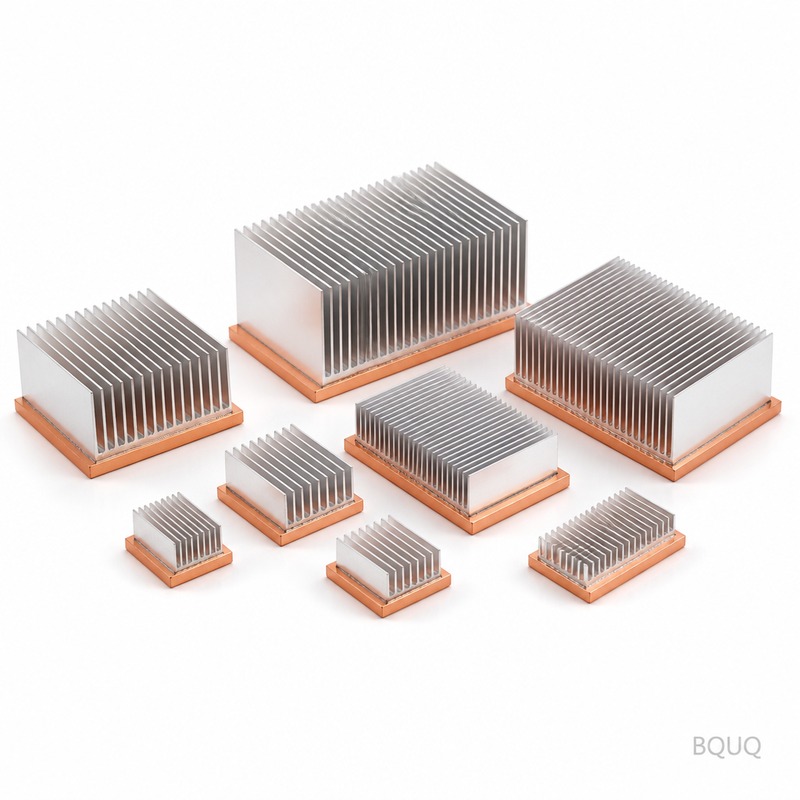
Was treibt die Kosten von Kühlkörpern: Matrize, Strangpressen, Bearbeitung und Oberfläche
Die Kosten für Kühlkörper setzen sich aus vier Entscheidungen zusammen: Werkzeug (die Matrize oder deren Verzicht), das Strangpressprofil oder Ausgangsmaterial, die Bearbeitungsvorgänge, die aus dem rohen Profil ein fertiges Teil machen, und die Oberflächenbehandlung. Ein einfaches, auf Länge geschnittenes Strangpressprofil kann in großen Stückzahlen 1–5 $ kosten; mit kundenspezifischer Matrize, Fräsen der Grundplatte, Bohren und schwarzer Eloxierung kann dieselbe Grundfläche bei 5–20 $ liegen, bis sich die Matrize amortisiert hat. Die Kunst besteht darin zu wissen, welche Ebene Ihr Budget belastet.
Kühlkörper sehen einfach aus – ein Stück Aluminium mit Rippen – daher sind Käufer regelmäßig überrascht über die Preisunterschiede zwischen zwei optisch ähnlichen Teilen. Die Spanne ist fast nie Magie; es ist die Mengenmathematik des Werkzeugs und die Maschinenzeit, die in der Geometrie verborgen ist. Dieser Leitfaden schlüsselt den Preis Schicht für Schicht auf, damit Sie genau sehen, wohin das Geld fließt und welche Stellschrauben es tatsächlich bewegen.
Ebene 1: Werkzeug – die Matrize oder deren Verzicht
Strangpressprofile benötigen eine Strangpressmatrize, und Matrizen kosten echtes Geld, da es sich um Präzisionsstahlwerkzeuge handelt, die auf Ihren genauen Querschnitt zugeschnitten sind. Eine typische Matrize für ein Kühlkörperprofil kostet je nach Komplexität zwischen 900 und 2.500 $, wobei ein zweiter Satz „Streck-/Richtwerkzeuge“ und Probeläufe bei der Erstbestellung etwas mehr kosten. Die Matrize ist ein fester Kostenblock, der auf jeden Meter verteilt wird, den Sie jemals strangpressen, was ihren Anteil pro Teil zu einem reinen Mengenspiel macht.
| Fertigungsweg | Werkzeugkosten (typ.) | Wann sich die Rechnung lohnt |
|---|---|---|
| Strangpressen, vorhandenes Lagerprofil | Keine (Matrize vorhanden) | Jede Menge; am günstigsten pro Teil |
| Strangpressen, neue kundenspezifische Matrize | 900–2.500 $ | ~500+ m/Jahr oder mehrjähriges Programm |
| CNC-Bearbeitung aus Vollmaterial | Keine (nur Programmierung) | Prototypen und Kleinserien, komplexe Grundplatten |
| Gestanzte/gefaltete Rippen | Matrize 2.000–8.000 $+ | 50.000–100.000+ Stück/Jahr |
| Gebondete/geschabte Rippen | Vorrichtung + Bondwerkzeug | Hochleistung, mittlere Stückzahlen |
Fazit: Die Matrize ist eine Wette auf die Stückzahl. Wenn das Programm insgesamt 200 Teile umfasst, schlägt eine 1.500 $-Matrize mit 7,50 $ pro Teil zu Buche, bevor auch nur ein Span fällt – fast immer schlechter als die Bearbeitung aus Vollmaterial. Wenn das Programm 50.000 Stück pro Jahr umfasst, kostet dieselbe Matrize 0,03 $ pro Teil und ist praktisch kostenlos. Vergleichen Sie niemals ein Strangpressangebot mit einem Bearbeitungsangebot, ohne die Matrize durch Ihre tatsächliche Stückzahl zu teilen.
Ebene 2: Material und Strangpressen
Das Strangpressen selbst wird pro Kilogramm Aluminium plus einem Laufzuschlag abgerechnet, der die Schwierigkeit des Profils widerspiegelt. Ein einfaches symmetrisches Profil läuft schnell; ein hohes Profil mit dünnen Rippen läuft langsam und verkürzt die Matrizenlebensdauer. Die Legierung beeinflusst den Preis weniger als erwartet – 6063-T5 ist die Standardlegierung für thermische Strangpressprofile und kostet in den meisten Hütten etwa so viel wie 6061 – aber die Profilschwierigkeit bewegt den Preis spürbar. Nach dem Strangpressen wird das Profil auf Länge geschnitten, und jeder weitere Vorgang lässt die Kosten pro Teil wirklich steigen.
| Profilleistungsmerkmal | Auswirkung auf die Strangpresskosten | Anmerkungen |
|---|---|---|
| Einfaches flaches oder blockförmiges Profil | Basislinie | Schnellste Pressgeschwindigkeit |
| Rippenprofil, Teilung ≥ 6 mm | +0–15 % | Standard-thermische Profile |
| Dichte Rippen, Teilung < 4 mm | +15–40 % | Langsamere Presse, mehr Matrizenverschleiß |
| Dünne Wände unter ~1,5 mm | +20–50 % | Schwer zu füllen, Maßhaltigkeit leidet |
| Asymmetrie oder dünne Stege | +10–30 % | Metallfluss schwerer auszubalancieren |
Fazit: Die Strangpresskosten folgen der Schwierigkeit, Metall durch die Matrize zu drücken, und dichte oder dünnwandige Profile zahlen doppelt – einmal in der Pressgeschwindigkeit und einmal in der Matrizenwartung. Wenn Ihre Rippen eine Teilung von weniger als ~4 mm benötigen, fragen Sie, ob die Leistungsanforderung real ist, bevor Sie die Strangpressprämie zahlen; die Antwort ist oft, die Rippen zu verbreitern und einen Lüfter hinzuzufügen.
Ebene 3: Bearbeitung – wo die Kosten pro Teil entstehen
Sehr wenige Kühlkörper werden als blankes Strangpressprofil versandt. Die meisten müssen auf Länge geschnitten, die Grundplatte für Ebenheit gefräst, Montagebohrungen gebohrt und Gewinde geschnitten werden, und manchmal sind Taschen, Stufen oder Montageansätze erforderlich. Jeder dieser Vorgänge ist Maschinenzeit, und die Maschinenzeit ist der größte kontrollierbare Kostenfaktor im Stapel. Das Sägen auf Länge ist der günstigste Vorgang und gilt für jedes Teil; das Fräsen der Grundplatte für Ebenheit bringt einen niedrigen bis mittleren Aufschlag mit sich und ist überall dort erforderlich, wo ein Leistungsbauelement auf guten TIM-Kontakt angewiesen ist; das Bohren und Gewindeschneiden von Montagebohrungen ist ein weiterer niedriger bis mittlerer Posten in den meisten Baugruppen. Taschen, Stufen und Senkungen für Bauelementaufnahmen bewegen sich im mittleren Bereich, und eine enge Ebenheitstoleranz wie ≤ 0,1 mm über 100 mm auf einer IGBT- oder Modulfläche erfordert einen mittleren Aufschlag, da sie eine stabile Aufspannung und echte Prüfung verlangt. Die vollständige CNC-Profilbearbeitung aus Vollmaterial liegt an der Spitze des Kostenspektrums und rechtfertigt ihren Preis nur bei kurzen Läufen oder komplexer Geometrie.
Fazit: Jeder zusätzliche Vorgang ist eine Position im Angebot, daher ist das günstigste Kühlkörperdesign das mit den wenigsten Merkmalen nach dem Strangpressen. Kombinieren Sie Vorgänge, wo Sie können – eine einzige gefräste Fläche, die sowohl als TIM-Oberfläche als auch als Bezug für das Bohren dient, ist günstiger als zwei separat tolerierte Merkmale.
Ebene 4: Oberfläche und der endgültige Preisstapel
Eloxieren ist die Standardoberfläche für Kühlkörper, und genau hier treiben kosmetische Anforderungen die Kosten in die Höhe. Klares oder schwarzes Eloxieren von Strangpressprofilen erhöht die Kosten pro Teil in der Regel um einen moderaten Betrag, der mit der Oberfläche skaliert; Maskieren für selektives Eloxieren, enge Farbabstimmung oder kosmetische Oberflächen der Klasse A erhöhen die Handhabungs- und Ausschusskosten in einem Maße, das in keinem Verhältnis zu ihrem technischen Wert steht. Auf der thermischen Seite hilft schwarzes Eloxieren bei natürlich konvektiven Designs tatsächlich, daher sollte die Wahl der Oberfläche der Kühlungsart folgen, nicht der Marketingabteilung.
| Oberfläche oder Zusatz | Typischer Kostenhinweis | Technischer Wert |
|---|---|---|
| Keine (Walzhaut) | Kostenlos | In Ordnung bei Zwangslüftung |
| Klares Eloxieren | Niedriger Aufschlag | Korrosionsschutz, Standard |
| Schwarzes Eloxieren | Niedriger bis mittlerer Aufschlag | Echter Gewinn bei natürlicher Konvektion (Strahlung) |
| Maskieren für selektives Eloxieren | Mittlerer Aufschlag | Nur für leitfähige Montageflächen |
| Kosmetische Oberfläche Klasse A | Hoher Aufschlag | Bei einem Kühlkörper selten erforderlich |
| Chromatieren/Konversionsschicht | Niedriger Aufschlag | Elektrische Erdungspfade, Korrosion |
Fazit: Kombiniert man die vier Ebenen in einer Betrachtung, wird die Preisstruktur lesbar. Nachfolgend ein indikativer Kostenstapel für einen mittelgroßen stranggepressten Kühlkörper bei verschiedenen Stückzahlen – behandeln Sie die Zahlen als Bereiche, nicht als Angebote, denn Ihre Zeichnung bestimmt den tatsächlichen Wert.
| Szenario (mittelgroße Klasse 100 × 100 mm) | 50 Stück | 500 Stück | 5.000 Stück |
|---|---|---|---|
| Vorhandenes Lagerprofil, nur Sägeschnitt | 4–8 $ | 2–4 $ | 1–2,5 $ |
| Vorhandenes Profil + Fräsen der Grundplatte + Löcher + schwarzes Eloxieren | 8–18 $ | 4–8 $ | 2,5–5 $ |
| Neue kundenspezifische Matrize + bearbeitet + eloxiert (Matrize amortisiert) | 20–40 $ | 6–12 $ | 3–6 $ |
| CNC-Bearbeitung aus Vollmaterial, komplexe Grundplatte | 15–40 $ | 8–18 $ | 5–12 $ |
Fazit: Die Stückzahl reduziert jede Ebene außer Material und Maschinenzeit. Die größte Einsparung bei den meisten Programmen ist nicht das Verhandeln – es ist die Wahl des Fertigungswegs, der zur tatsächlichen Jahresmenge passt, und genau dieses Gespräch sollte mit der Fabrik geführt werden, bevor eine Matrize geschnitten wird. Eine Fabrik, die stranggepresste Kühlkörper, CNC-bearbeitete Kühlkörper und gestanzte Kühlkörper unter einem Dach herstellt, kann diese Entscheidung ohne Aufschläge steuern; unser Konstruktionsleitfaden für Kühlkörper-Strangpressprofile behandelt die Profilgrenzen, die Matrizenkosten und Strangpresspreise im Rahmen halten.
Häufig gestellte Fragen
F: Wie viel kostet eine kundenspezifische Strangpressmatrize für einen Kühlkörper?
A: Eine typische Matrize für ein Kühlkörperprofil kostet je nach Größe und Komplexität etwa 900–2.500 $, wobei Muster- und Richtarbeiten die Erstbestellung verteuern. Die Matrize ist eine einmalige Kosten, die vernachlässigbar wird, sobald die Menge einige tausend Meter Profil überschreitet.
F: Warum ist mein Angebot für eine kleine Menge Kühlkörper so teuer?
A: Weil Fixkosten – Matrizenamortisation (falls vorhanden), Programmierung, Rüstzeit und Erstmusterprüfung – auf wenige Teile verteilt werden und kurze Strangpressläufe einen Mindestbetrag kosten. Bei 50 Stück ist die Bearbeitung aus Vollmaterial oft günstiger als das Strangpressen; bei 5.000 Stück kann dasselbe Design auf ein Drittel des Stückpreises fallen.
F: Erhöht schwarzes Eloxieren die Kosten eines Kühlkörpers stark?
A: Schwarzes Eloxieren erhöht die Kosten pro Teil bei Standard-Strangpressprofilen nur um einen moderaten Betrag, obwohl es mit der Oberfläche skaliert. Es verbessert auch tatsächlich die Leistung bei natürlicher Konvektion durch Strahlung, ist also in der Regel die richtige Oberfläche für passive Designs – und der falsche Ort, um Kosten zu sparen.
F: Was ist der günstigste Weg, einen Kühlkörper herzustellen?
A: Verwenden Sie ein vorhandenes Lager-Strangpressprofil, schneiden Sie es auf Länge und führen Sie keine Nachbearbeitung durch, die nicht unbedingt für die Baugruppe erforderlich ist. Jeder zusätzliche Vorgang – Fräsen der Grundplatte, Bohren, Gewindeschneiden, Eloxieren, Verpacken für kosmetische Oberflächen – fügt eine Kostenebene mit einem echten technischen Grund hinzu.
F: Ab wann ist Stanzen günstiger als Strangpressen für Kühlkörper?
A: Typischerweise ab etwa 50.000–100.000 Stück pro Jahr, wenn sich die Kosten für das Blechwerkzeug nahezu amortisiert haben und dünne Rippen aus Coil-Material geformt werden können. Unterhalb dieser Menge gewinnen fast immer stranggepresste oder CNC-bearbeitete Konstruktionen bei den Gesamtkosten.
Verwandte Artikel
- cnc-machined-heat-sinks-guide – Mehr aus der BQUQ Thermal Management Engineering-Serie.
- heat-sink-extrusion-design-guide – Mehr aus der BQUQ Thermal Management Engineering-Serie.
- heat-sink-fin-design-guidelines – Mehr aus der BQUQ Thermal Management Engineering-Serie.
Verwandte Ressourcen
- Über BQUQ: eine ISO9001-zertifizierte Quellenfabrik in Dongguan mit vier Produktionslinien unter einem Dach.
- Kühlkörper und thermische Teile: stranggepresste, CNC-bearbeitete und gestanzte Optionen aus der Thermik-Linie – stranggepresste Kühlkörper, CNC-bearbeitete Kühlkörper, gestanzte Kühlkörper.
- Branchentrends: Fertigungs-, Materialmarkt- und Beschaffungsanalysen für Käufer.
- Technische Artikel: Engineering-Leitfäden und Prozessvergleiche – mehr, wo dieser Artikel herkommt.
- FAQ-Hub: schnelle Antworten zu CNC, Stanzen, Federn und Kühlkörpern.
- Fallstudien: echte Teile und echte Zahlen aus Projekten, die wir entwickelt und geliefert haben.
- Kontakt: Senden Sie Ihre Zeichnung und erhalten Sie ein Angebot innerhalb von 12 Arbeitsstunden.
Verfasst vom BQUQ Engineering-Team. BQUQ ist eine ISO9001-zertifizierte Quellenfabrik in Dongguan, China, die CNC-Bearbeitung, Metallstanzen, kundenspezifische Federn, Kühlkörper- und Spannzangenlinien unter einem Dach betreibt. Senden Sie Zeichnungen an sc@bquq.com oder WhatsApp +86 13713157787 für ein Angebot innerhalb von 12 Arbeitsstunden. www.bquq.com