Spannzangenstahl und Wärmebehandlung balancieren Federfinger gegen verschleißfeste Bohrungen, typischerweise 45-62 HRC. BQUQ bearbeitet beides, ISO9001-zertifiziert.
Spannzangenwerkstoffe und Wärmebehandlung: Von Federstahl bis gehärteter Legierung
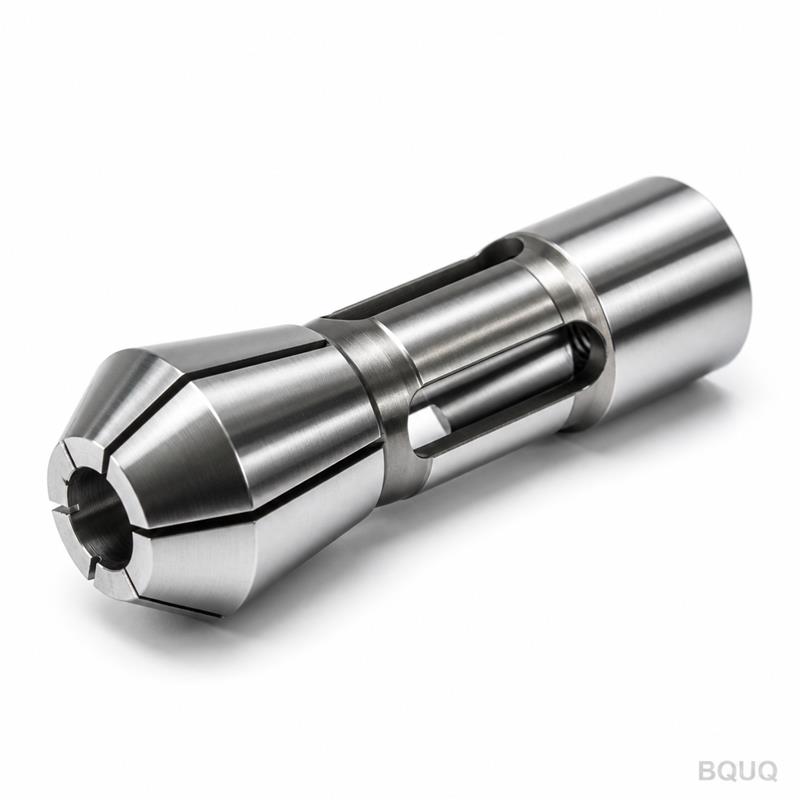
Spannzangenwerkstoff und Wärmebehandlung bestimmen die drei Eigenschaften, die eine Spannzange ausmachen oder scheitern lassen: das Federverhalten der geschlitzten Finger, die Verschleißfestigkeit der Bohrung und die Stabilität der geschliffenen Geometrie. Federstahlkörper laufen typischerweise mit 45–52 HRC, damit die Finger Millionen von Zyklen flexen, ohne zu reißen; gehärtete Legierungsbohrungen können 58–62 HRC erreichen, wo Verschleiß dominiert – und das gesamte Teil muss während des Schleifens maßstabil bleiben.
Eine Spannzange ist ein Widerspruch, der aus einem einzigen Stück Metall gefertigt wird. Ihre Finger müssen sich wie eine Feder verhalten und sich zehntausende Male pro Schicht öffnen und schließen. Ihre Bohrung muss sich wie ein Lagerlauf verhalten, abrasivem Stangenmaterial widerstehen und eine Mikrometer-Geometrie halten. Ihr Konus muss ohne Fressen präzise im Futter sitzen. Keine einzelne Härte erfüllt alle drei Aufgaben, daher wählen Spannzangenhersteller den Stahl und die Wärmebehandlung, um sie auszubalancieren – und die Balance ist bei einer Federspannzange anders als bei einer Vollspannzange oder einem Futterbauteil.
Was jedes Spannzangenelement vom Werkstoff verlangt
Zerlegt man die Spannzange in funktionale Zonen, werden die Materialanforderungen klar. Der geschlitzte Fingerbereich benötigt Dauerfestigkeit: Er biegt sich bei jedem Zyklus, und ein Riss, der an einem Schlitzgrund beginnt, beendet das Leben der Spannzange – oder schlimmer, sendet ein Fragment in die Maschine. Die Bohrung benötigt Härte und Verschleißfestigkeit: Stangenmaterial, das beim Vorschub hindurchgleitet, ist ein abrasives Ereignis, das in Tausenden von Zyklen gemessen wird. Der Konus benötigt eine zähe, fressbeständige Oberfläche, die wiederholt am Futterkegel anliegt.
| Spannzangenzone | Dominante Anforderung | Typische Härte (Industrie) |
|---|---|---|
| Geschlitzte Finger | Dauerfestigkeit, elastische Rückstellung | 45–52 HRC typisch |
| Bohrung | Verschleißfestigkeit, Maßstabilität | 55–62 HRC typisch |
| Konus/Sitzfläche | Fressbeständigkeit, Zähigkeit | 45–58 HRC typisch |
| Vollspannzangenkörper | Steifigkeit, Verschleißfestigkeit | 58–62 HRC typisch |
Die Zahlen sind typische Handelsbereiche, kein einzelner Standard – der richtige Wert hängt von Spannzangengröße, Schlitzgeometrie und Einsatz ab. Das Muster ist der Punkt: Die Zonen, die flexen müssen, werden zäher und etwas weicher gehalten, während die Zonen, die Abrieb überstehen müssen, bis zur praktischen Grenze gehärtet werden.
Federstahl: Der klassische Spannzangenkörper
Federstahl ist die traditionelle Antwort für geschlitzte Spannzangenkörper, da er genau für diese Aufgabe entwickelt wurde: elastische Verformung, Zyklus für Zyklus, ohne bleibende Verformung. Die Metallurgie ist ein mittel- bis hochkohlenstoffhaltiger oder legierter Stahl, der auf einen Federzustand gehärtet und angelassen wird – hart genug, um in Form zurückzukehren, angelassen genug, um an den Schlitzgründen nicht zu reißen.
Der Anlasskompromiss ist das Herzstück der Wahl. Zu hart angelassen, brechen die Finger nach einigen tausend Zyklen – der klassische Ausfall „neue Spannzange in einer Woche gerissen“, meist aufgrund einer Härtespezifikation, die von einem Verschleißteil kopiert wurde. Zu weich angelassen, nehmen die Finger eine bleibende Verformung an, die Spannzange öffnet nicht mehr vollständig und das Stangenmaterial schleift beim Vorschub. Das korrekte Anlassen hinterlässt die Finger bei der Betriebsdurchbiegung der Bohrungsgröße elastisch, weshalb kleine Spannzangen mit proportional dickeren Fingern härter laufen können als große dünnwandige.
| Stahlfamilie | Typische Verwendung in Spannzangen | Schlüsseleigenschaft |
|---|---|---|
| Hochkohlenstoff-Federstahl | Geschlitzte Federspannzangenkörper | Elastische Rückstellung, Ermüdungslebensdauer |
| Silizium-Mangan-Federstahl | Schwerere Federspannzangen | Höhere Dauerfestigkeit |
| Chromlegierungsstahl | Gehärtete Spannzangen und Vollspannzangen | Tiefenhärtung, Verschleißfestigkeit |
| Wälzlagerlegierungsstahl | Hochverschleißfeste Bohrungen, Vollspannzangen | Extreme Härte, Stabilität |
Kornrichtung und Reinheit sind ebenso wichtig wie die Güte: Ein Schlitz, der über eine schlechte Einschlusszeile geschnitten wird, ist ein vorbestehender Riss. Seriöse Spannzangenproduktion beginnt mit qualitätsgesichertem Stangenmaterial und kontrolliert die Stahlquelle, da die Ermüdungslebensdauer nicht in eine fertige Spannzange hineingeprüft werden kann – sie wird beim Erschmelzen gekauft.
Härten und Anlassen: Die Prozessreihenfolge
Die Wärmebehandlung einer Federspannzange folgt einer bewussten Abfolge, und die Reihenfolge ist ebenso wichtig wie die Temperaturen. Der Rohling wird mit leicht untermaßiger Bohrung und entweder ungeschnittenen oder grob geschnittenen Schlitzen bearbeitet. Anschließend wird er gehärtet: austenitisiert, abgeschreckt und auf die Zielhärte für den Federdienst des Körpers angelassen. Erst wenn der Stahl stabil ist, beginnt die Präzisionsarbeit – die Bohrung wird auf Endmaß geschliffen und der Konus fertigbearbeitet, da Schleifen nach dem Härten die Geometrie an einem Teil wahr hält, das sich nicht mehr bewegen wird.
Schlitze sind ein Sonderfall. Das Schneiden von Schlitzen nach dem Härten riskiert Risse an den Gründen; das Schneiden vor dem Härten riskiert Verzug, der die Schlitzbreite schließt oder öffnet. Die Produktionspraxis variiert, aber die fertiggeschliffene Bohrung und die endgültige Schlitzgeometrie werden immer am gehärteten Teil ausgeführt, mit Spannungsarmglühen, wo der Prozess es erfordert. Schlitzgründe sind gerundet, niemals quadratisch gelassen – ein quadratischer Grund ist eine Ermüdungskerbe, die jeden Zyklus auf eine Linie konzentriert.
| Prozessschritt | Zweck | Typisches Ergebnis |
|---|---|---|
| Rohling bearbeiten | Nahezu endkonturnaher Körper, Bohrung und Konus | Stabiles Ausgangsmaterial für die Behandlung |
| Härten und Abschrecken | Vollständige Härtetransformation | Harter, verschleißfähiger Stahl |
| Anlassen | Zähigkeit und Federverhalten wiederherstellen | 45–52 HRC Körper typisch |
| Bohrung und Konus schleifen | Wahre Geometrie auf stabilem Stahl | Mikrometer-genaue Konzentrizität |
| Schlitze schneiden/fertigstellen | Endgültige Flexgeometrie | Gerundete Gründe, kontrollierte Breite |
| Endkontrolle | Bohrung, Konus, Rundlauf, Härteprüfungen | Klassenzertifikat pro Charge |
Die Kernaussage: Härten erfolgt vor dem Fertigschleifen, niemals danach. Eine Spannzange, die geschliffen und dann gehärtet wird, hat sich bewegt, bis sie bei Ihnen ankommt, und ihre Rundlaufklasse ist Fiktion. Wenn ein Lieferant die Prozessreihenfolge nicht angeben kann, behandeln Sie das Rundlaufzertifikat mit Misstrauen.
Gehärtete Legierungsbohrungen und Vollspannzangen
Wo Verschleiß dominiert – Vollspannzangen, Aufnahme-Spannzangen und die Bohrungszone von schweren Federspannzangen – greifen Hersteller auf Chrom- und Wälzlagerlegierungsstähle zurück, die tief und gleichmäßig härten. Diese Güten erreichen das obere Ende des Härtebereichs und behalten ihre Geometrie, da sie durchgehärtet statt einsatzgehärtet sind; eine dünne Randschicht an einer Spannzangenbohrung würde durchscheuern und weiches Metall genau dort freilegen, wo das Stangenmaterial gleitet.
Vollspannzangen können am oberen Ende des Härtebereichs laufen, da nichts flexen muss. Der Kompromiss erscheint am anderen Ende des Spannzangenlebens: Eine sehr harte Spannzange ist in dünnen Abschnitten spröde und neigt eher zum Ausbrechen an Bohrungskanten, wenn Stangenmaterial schief aufläuft. Das Design von Vollspannzangen bewältigt dies mit Abschnittsdicke und Kantenbehandlung, nicht durch Aufweichen des Stahls.
Werkstoff auf den Einsatz abstimmen
Die Auswahlhilfe ist einfacher, als die Metallurgie vermuten lässt. Stangenfütternde Federspannzangen an Automaten und Schweizer Drehmaschinen: Federstahlkörper, für Ermüdung angelassen, Bohrung gehärtet und geschliffen. Vollspannzangen für Schleifen und Hartdrehen: Legierungsstahl durchgehärtet bis zum oberen Bereich. Hochverschleißendes oder abrasives Stangenmaterial (Edelstahl, kaltgezogene Legierungen): die härtere Bohrungsbehandlung spezifizieren und kürzere Bohrungslebensdauerintervalle einplanen. Weiches Stangenmaterial (Messing, Aluminium): Die Härte kann sinken, aber die Ermüdungsspezifikation der Finger bleibt.
Zwei praktische Warnungen. Erstens: Härte ist ein Bereich, und das Zertifikat sollte ihn angeben: Eine „gehärtete“ Spannzange ohne Zahl sagt Ihnen nichts. Zweitens: Härten Sie eine verschlissene Spannzange niemals neu – die Schlitze und die Bohrung wurden nach der ursprünglichen Behandlung fertigbearbeitet, und ein zweites Abschrecken verzieht die Geometrie über die Reklamationsgrenze hinaus. Ersetzen, nicht neu behandeln.
Was Sie einen Spannzangenlieferanten fragen sollten
Stellen Sie vier Fragen: welche Stahlfamilie der Körper verwendet, den Zielhärtebereich mit Zertifikat, ob die Bohrung nach dem Härten geschliffen wird und welche Ermüdungslebensdauer die Schlitzkonstruktion bei Ihrer Bohrungsgröße anstrebt. Die Antworten trennen eine Fabrik, die Spannzangen als Präzisionsfedern behandelt, von einer, die Formen bearbeitet und sie als nachträglichen Gedanken härtet.
Bei BQUQ laufen die Spannzangenlinien mit dieser Disziplin im Haus: Federspannzangen für die Familien 36/46/52/60/630/643, bearbeitet aus Federstahl und gehärteter Legierung, Bohrungen nach der Wärmebehandlung geschliffen, und Härte und Rundlauf vor dem Versand verifiziert – alles unter ISO9001-Prozesskontrolle in derselben Fabrik in Dongguan, die unsere CNC-, Stanz-, Feder- und Kühlkörperlinien betreibt. Durchsuchen Sie das Sortiment an Automatenspannzangen und die Schweizer und 2J Spannzangenfutter, in denen sie sitzen, und behalten Sie das andere Ende des Lebenszyklus mit unserem Leitfaden zur Spannzangenwartung im Hinterkopf – die Werkstoffwahl entscheidet, wie lange eine Spannzange hält, aber die Pflege entscheidet, ob sie an Altersschwäche oder an Vernachlässigung stirbt. Senden Sie Ihre Maschinen- und Stangendaten an sc@bquq.com für ein Angebot innerhalb von 12 Arbeitsstunden.
Häufig gestellte Fragen
F: Warum ist eine Spannzange sowohl hart als auch federnd?
A: Verschiedene Zonen benötigen unterschiedliche Eigenschaften. Die geschlitzten Finger müssen sich über Millionen von Zyklen elastisch verformen, daher sind sie auf einen Federzustand um 45–52 HRC typisch angelassen; die Bohrung muss Abrieb widerstehen, daher ist sie auf 55–62 HRC typisch gehärtet. Ein Teil, zwei Wärmebehandlungsziele.
F: Warum ist meine neue Spannzange an einem Schlitz gerissen?
A: Die üblichen Ursachen sind ein Schlitzgrund, der quadratisch statt gerundet gelassen wurde, ein überhärtetes Anlassen, das die Zähigkeit entfernte, oder ein Stahlfehler am Schlitz. Ein Riss in den ersten Wochen des Betriebs ist ein Fertigungsproblem – fordern Sie das Härtezertifikat an und ersetzen Sie die Spannzange.
F: Soll die Bohrung vor oder nach dem Härten geschliffen werden?
A: Nachher. Das Schleifen der Bohrung und des Konus am gehärteten Teil garantiert, dass die Geometrie für das Leben der Spannzange wahr bleibt. Härten nach dem Schleifen verzieht die Bohrung und macht die Rundlaufklasse bedeutungslos.
F: Kann eine verschlissene Spannzange neu gehärtet und wiederverwendet werden?
A: Nein. Neuhärten verzieht die fertige Bohrung, den Konus und die Schlitze über die praktische Reklamationsgrenze hinaus, und die Ermüdungsgeschichte der Finger ist bereits verbraucht. Ersatz ist billiger als die Ausschussteile, die eine neu behandelte Spannzange produzieren wird.
F: Welches Zertifikat sollte einer Spannzange beiliegen?
A: Mindestens die Materialidentität, der tatsächlich gemessene Härtebereich und die Rundlaufklasse von Bohrung zu Konus pro Stück oder pro Charge. BQUQ liefert Härte- und Rundlaufprüfdaten mit jeder Spannzangencharge – fordern Sie sie von jedem Lieferanten an, bevor Sie zahlen.
Verfasst vom BQUQ Engineering-Team. BQUQ ist eine ISO9001-zertifizierte Quellenfabrik in Dongguan, China, die CNC-Bearbeitung, Metallstanzen, kundenspezifische Federn, Kühlkörper- und Spannzangenlinien unter einem Dach betreibt. Senden Sie Zeichnungen an sc@bquq.com oder WhatsApp +86 13713157787 für ein Angebot innerhalb von 12 Arbeitsstunden. www.bquq.com