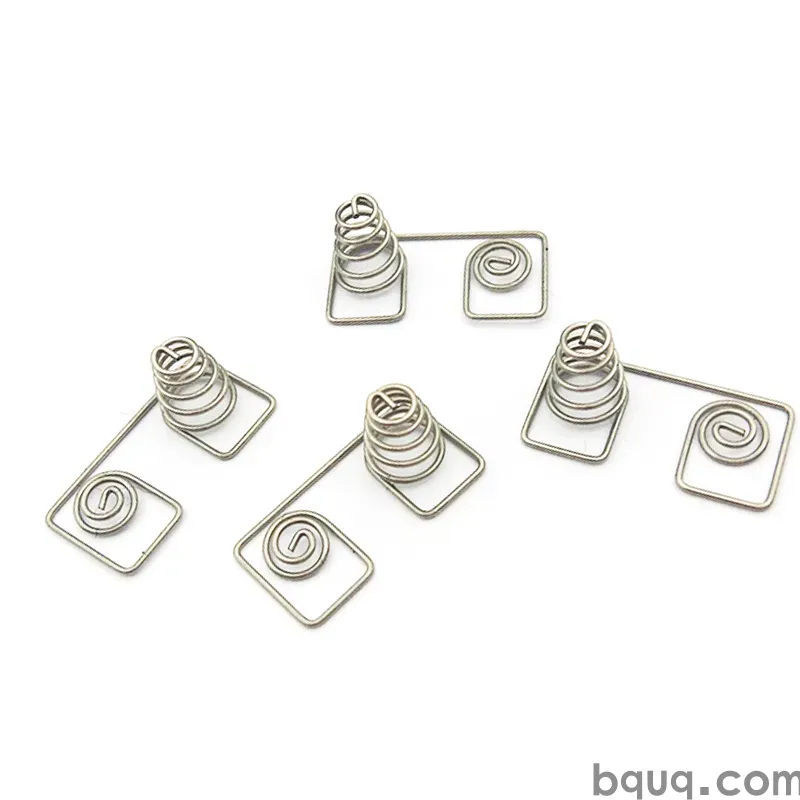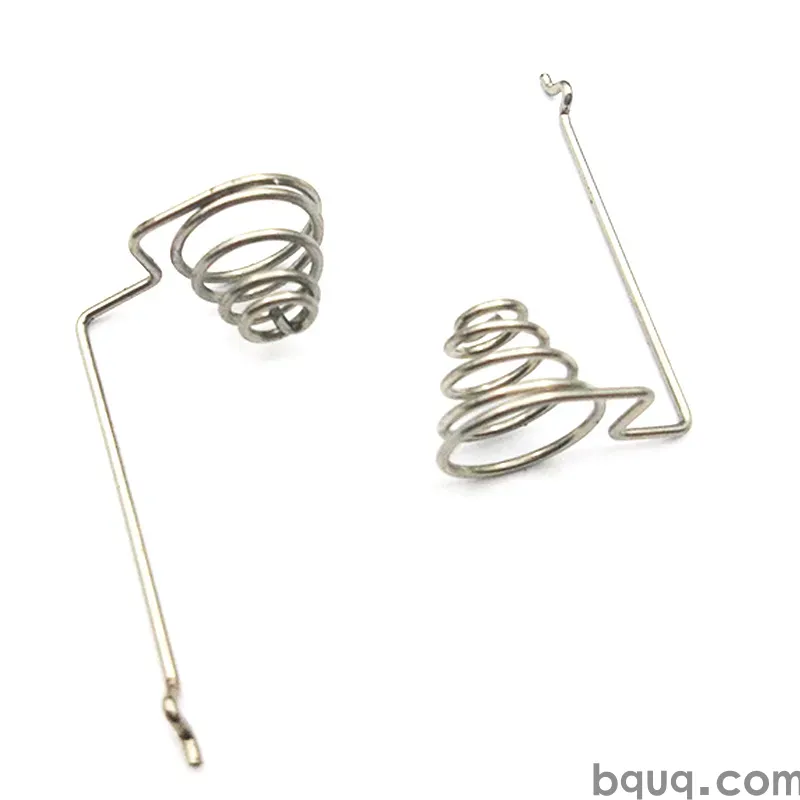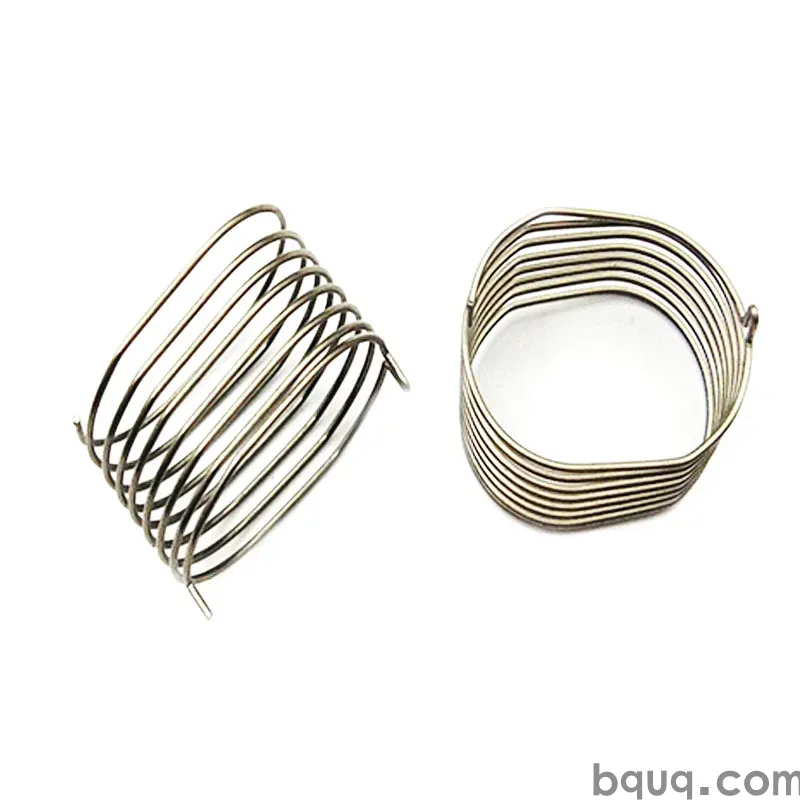
Kegel- und ungleichmäßig gewickelte Federn: Blockieren, Stabilität und progressive Kennlinie – wann sie geraden Wendeln überlegen sind. BQUQ (ISO9001, Dongguan) fertigt sie.
Kegel- und ungleichmäßig gewickelte Federn: Wann sie geraden Wendeln überlegen sind
Kegel- und ungleichmäßig gewickelte Federn sind geraden Wendeln in drei spezifischen Situationen überlegen: wenn die blockierte Höhe minimal sein muss (Kegelfedern verschachteln sich Windung in Windung), wenn die Feder im freien Raum nicht knicken darf (Kegelfedern sind seitlich stabil), und wenn der Mechanismus eine Kennlinie benötigt, die mit zunehmender Federung ansteigt (ungleichmäßige Teilung oder Kegelform). Überall sonst ist eine gerade Wendel günstiger und berechenbarer – die Konstruktionsfrage lautet also, welches Problem Sie tatsächlich haben.
Eine gerade Druckfeder ist aus gutem Grund der Standard: lineare Kennlinie, einfache Berechnung, kostengünstig zu wickeln. Sie hat jedoch feste Schwächen – die Blocklänge beansprucht Platz, lange schlanke Wendeln knicken, und die Kennlinie ändert sich nie. Kegel-, Tonnen- und Sanduhrformen existieren, um diese Schwächen zu beheben, jeweils um den Preis höherer Komplexität. Die richtige Wahl besteht darin, die Geometrie an die Randbedingung anzupassen, die in Ihrer Baugruppe tatsächlich kritisch ist.
Warum es Kegelfedern gibt: Verschachtelte Blocklänge
Eine Kegelfeder wird mit abnehmendem Windungsdurchmesser gewickelt, sodass sich die Windungen bei vollständiger Kompression ineinander verschachteln. Die Blocklänge kann auf ungefähr einen Drahtdurchmesser pro Windung plus Basis reduziert werden – deutlich geringer als bei einer geraden Feder mit gleichem Federweg, deren Blocklänge jede Windung auf die andere stapelt. In Produkten, bei denen die blockierte Höhe das entscheidende Maß ist – Batteriefächer, kompakte Aktuatoren, Kameramechanismen – ist die Kegelform oft der einzige Weg, um den gewünschten Federweg zu erreichen.
| Federform | Verhalten der Blocklänge | Kennlinienverhalten | Knicksicherheit |
|---|---|---|---|
| Gerade Wendel | Windungen stapeln: Blocklänge = d × n | Linear | Knicken bei Schlankheit |
| Kegelfeder | Windungen verschachteln: geringste Blocklänge | Progressiv (steigend) | Ausgezeichnet – stabil |
| Tonnenfeder (größere Mitte) | Mäßiges Stapeln | Linear | Gut |
| Sanduhrfeder (kleinere Mitte) | Mäßiges Stapeln | Linear | Gut – seitlich stabil |
| Ungleichmäßige Teilung | Wie gerade Wendel (gleicher Außendurchmesser) | Progressiv | Wie gerade Wendel |
Kernaussage: Wenn Ihre Randbedingung die blockierte Höhe ist, gewinnt die Kegelfeder eindeutig – das Verhältnis von Federweg zu Blocklänge ist das beste aller Wendelformen. Wenn Ihre Randbedingung die seitliche Stabilität im freien Raum ist (eine Feder, die allein steht und nicht seitlich ausweichen darf), widerstehen Kegel-, Tonnen- und Sanduhrformen dem Knicken besser als eine gerade Wendel gleicher Länge, da die gekrümmte Mittellinie die seitliche Last verteilt. Diese beiden Vorteile decken die meisten Anwendungen von Kegelfedern ab.
Die progressive Kennlinie: Was eine steigende Steifigkeit bringt
Eine Kegelfeder ist nicht nur kürzer, wenn sie komprimiert wird – sie ist auch steifer, denn wenn die großen Windungen Windung für Windung auf Block gehen, bleiben weniger aktive Windungen übrig und die Kennlinie steigt. Ungleichmäßig gewickelte Federn (gleicher Durchmesser, aber die Teilung ändert sich entlang der Länge) erzeugen denselben progressiven Effekt: Das eng gewickelte Ende blockiert zuerst, dann steigt die Kennlinie. Eine steigende Kennlinie verleiht einem Mechanismus ein weiches Gefühl bei leichten Lasten und ein festes bei schweren Lasten – nützlich für eine Aufhängung, die kleine Vibrationen isolieren und gleichzeitig große Stöße abfangen muss, ohne auf Block zu gehen.
| Anwendungsbedarf | Form, die dies liefert | Warum |
|---|---|---|
| Weicher Start, festes Ende (Aufhängung, Ventil) | Ungleichmäßige Teilung oder Kegelform | Kennlinie steigt, wenn Windungen progressiv blockieren |
| Konstante Eigenfrequenz | Gerade Wendel | Lineare Kennlinie, einfache Abstimmung |
| Stoßdämpfung ohne Windungsschluss | Progressive Feder | Versteifende Kennlinie widersteht dem Blockieren |
| Geringe Blocklänge | Kegelfeder (verschachtelt) | Windungen teleskopieren |
| Seitliche Stabilität im freien Raum | Kegel-, Tonnen-, Sanduhrform | Seitliche Lasten werden durch Geometrie aufgenommen |
Kernaussage: Die progressive Kennlinie ist nur dann ein Vorteil, wenn Sie tatsächlich nichtlineares Verhalten wünschen. Ein Mechanismus, der lediglich eine Feder benötigt, die mit Kraft X bei Höhe Y drückt, ist mit einer geraden Wendel besser bedient, da deren lineare Kennlinie die Kraft vorhersehbar und die Berechnung einfach macht. Konstrukteure wählen progressive Formen für Aufhängungen, Überlastschutz und Soft-Touch-Mechanismen – niemals, weil eine nichtlineare Kennlinie ausgefeilt klingt.
Konstruktionsgrenzen und reale Kosten nicht-gerader Wendeln
Die Kegel- und ungleichmäßig gewickelten Formen sind in der Herstellung und Konstruktion teurer und bringen spezifische Grenzen mit sich. Die Kennlinie einer Kegelfeder ist nicht konstant, was bedeutet, dass die Kraft-Weg-Kurve gemessen werden muss und nicht aus einer einzigen Formel berechnet werden kann – die meisten Konstruktionen benötigen vor der Produktion einen Prototyp und eine tatsächliche Kraftkurve. Das große Ende einer Kegelfeder benötigt normalerweise einen Sitz oder eine Führung, da sich der Windungsdurchmesser ändert und die Feder nicht von selbst plan stehen kann. Ungleichmäßig gewickelte Federn erfordern eine sorgfältige Kontrolle des Teilungsübergangs, sonst entwickelt die Kennlinienkurve einen Knick statt eines gleichmäßigen Anstiegs.
| Faktor | Gerade Wendel | Kegelform / ungleichmäßige Teilung |
|---|---|---|
| Berechnung der Kennlinie | Einzelne Formel | Gemessene Kurve, Prototyp erforderlich |
| Vorhersagbarkeit der Kraft | Hoch | Progressiv konstruktionsbedingt |
| Blocklänge | d × n | Deutlich geringer (Kegelform) |
| Wickelkosten | Basislinie | Typischerweise +20–50 % |
| Endenauflage | Plan geschliffene Enden | Möglicherweise Sitz oder Führung am großen Ende erforderlich |
| Messung | Standard-Lasttest | Kraftkurve bei mehreren Höhen |
Kernaussage: Planen Sie einen Prototyp und eine gemessene Kraft-Weg-Kurve ein, wann immer die Kennlinie progressiv ist – die Zeichnung allein kann Ihnen die tatsächliche Kurve mit Produktionstoleranzen nicht zeigen. Der Aufpreis gegenüber einer geraden Wendel beträgt typischerweise 20–50 % pro Teil und einen längeren Entwicklungszyklus; Kegel- und ungleichmäßig gewickelte Federn werden gewählt, wenn die Geometrie oder das Mechanismusverhalten sie erfordert, nicht als Upgrade. Bei großen Stückzahlen kann der Drahtform- und Wickelprozess die Form wiederholbar halten, aber das Erstmuster ist entscheidend: Verifizieren Sie die Kurve an realen Teilen, bevor Sie freigeben.
Auswahl: Drei Fragen, die die Form bestimmen
Stellen Sie drei Fragen, bevor Sie zu einer Kegel- oder ungleichmäßig gewickelten Konstruktion greifen. Erstens: Ist die blockierte Höhe die entscheidende Randbedingung? Wenn die Feder in einen kurzen Raum passen und dennoch einen langen Federweg bieten muss, ist die Kegelform die Antwort. Zweitens: Wird die Feder im freien Raum stehen, wo sie knicken könnte? Wenn ja und eine Führung unmöglich ist, bietet eine Kegel-, Tonnen- oder Sanduhrform Stabilität. Drittens: Soll der Mechanismus eine steigende Kennlinie haben? Wenn der Lastpfad weich-dann-fest ist, ist eine progressive Konstruktion richtig – und die gemessene Kraftkurve wird zu Ihrem Abnahmekriterium. Wenn alle drei Antworten nein sind, spezifizieren Sie eine gerade Druckfeder und geben Sie das gesparte Geld für Toleranz oder Oberfläche aus. Die Formen ergänzen sich, sie konkurrieren nicht – viele Baugruppen verwenden eine gerade Wendel, wo der Platz es erlaubt, und eine Kegelfeder nur dort, wo dies nicht der Fall ist.
BQUQ fertigt Kegel-, Tonnen-, Sanduhr- und ungleichmäßig gewickelte Federn unter ISO9001 in Dongguan und behandelt jedes Teil mit progressiver Kennlinie als Auftrag mit gemessener Kurve: zuerst Prototyp, Kraftkurve bei mehreren Höhen, dann Produktion mit der Kurve als Abnahmekriterium. Druckfedern aller Formen laufen auf der Druckfederlinie, Torsionsformen auf der Torsionslinie. Senden Sie die Zeichnung mit dem Bauraum und dem geforderten Kraft-Weg-Verhalten an sc@bquq.com oder WhatsApp +86 13713157787, und das Angebot kommt innerhalb von 12 Arbeitsstunden zurück – mit einer klaren Antwort, ob die Form ihre Kosten rechtfertigt.
F: Wann sollte ich eine Kegelfeder anstelle einer geraden Wendel verwenden?
Wenn die blockierte Höhe kritisch ist (verschachtelte Windungen ergeben die geringste Blocklänge), wenn die Feder frei steht und knicken würde, oder wenn Sie eine steigende Kennlinie wünschen. Andernfalls ist eine gerade Wendel günstiger, einfacher und vorhersehbarer.
F: Haben Kegelfedern eine lineare Kennlinie?
Nein. Eine Kegelfeder hat eine progressive Kennlinie: Die größten Windungen blockieren zuerst und die Kennlinie steigt mit zunehmender Durchbiegung. Wenn Sie eine lineare Kraft-Weg-Beziehung benötigen, verwenden Sie eine gerade Wendel oder eine Tonnenform mit konstanter Teilung.
F: Wie wird die Kraftkurve einer Kegelfeder spezifiziert?
Spezifizieren Sie die Kraft bei zwei oder drei Arbeitshöhen anstelle einer einzelnen Kennlinie, da sich die Kennlinie entlang des Federwegs ändert. Die Fabrik sollte die Kurve an Prototypen messen und diese Punkte als Produktionsabnahmekriterien verwenden.
F: Sind Kegelfedern teurer als gerade Wendeln?
Typischerweise 20–50 % mehr pro Teil, plus einen Prototypenschritt zur Ermittlung der Kraftkurve. Der Aufpreis erkauft eine geringe Blocklänge oder progressives Verhalten; wählen Sie die Form nur, wenn der Mechanismus eines davon wirklich benötigt.
F: Können ungleichmäßig gewickelte Federn in kleinen Durchmessern hergestellt werden?
Ja – ungleichmäßige Teilung ist hauptsächlich ein Merkmal der Wickelmaschinensteuerung und funktioniert bis zu kleinen Drahtgrößen, obwohl der Teilungsübergang sorgfältig kontrolliert werden muss. Dieselben Mikrofertigungsgrenzen für den Drahtdurchmesser gelten wie für jede Mikrofeder.
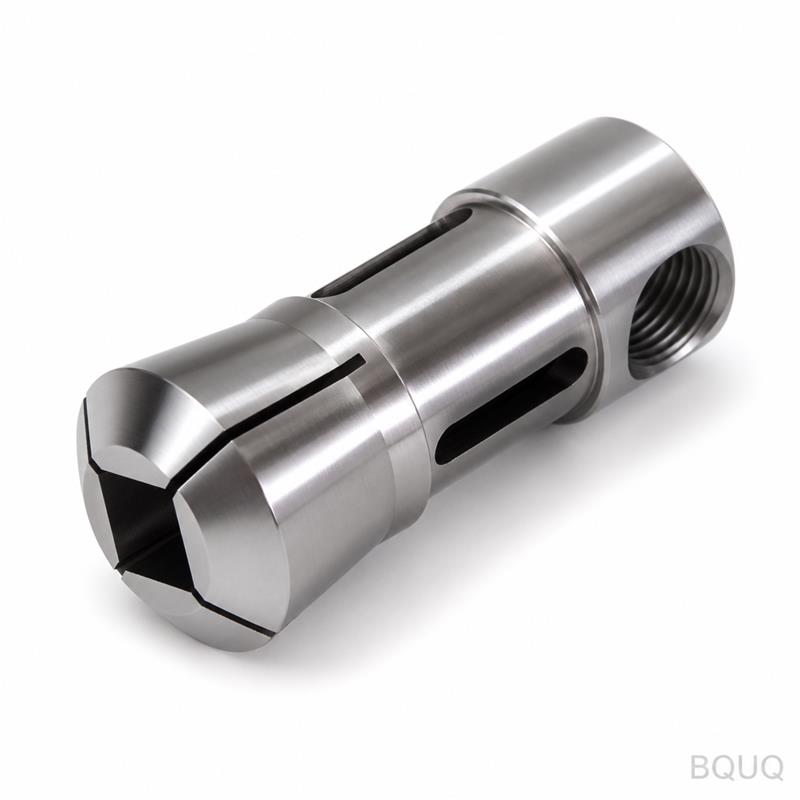
Verfasst vom BQUQ Engineering-Team. BQUQ ist eine ISO9001-zertifizierte Quellenfabrik in Dongguan, China, die CNC-Bearbeitung, Metallstanzen, kundenspezifische Federn, Kühlkörper- und Spannzangenlinien unter einem Dach betreibt. Senden Sie Zeichnungen an sc@bquq.com oder WhatsApp +86 13713157787 für ein Angebot innerhalb von 12 Arbeitsstunden. www.bquq.com