
7 Tips to Improve Heat Sink Thermal Performance | Design Guide
Jul 24,2026

7 Tips to Improve Heat Sink Thermal Performance | Design Guide
1. Optimize Fin Density and Thickness

1. Optimize Fin Density and Thickness

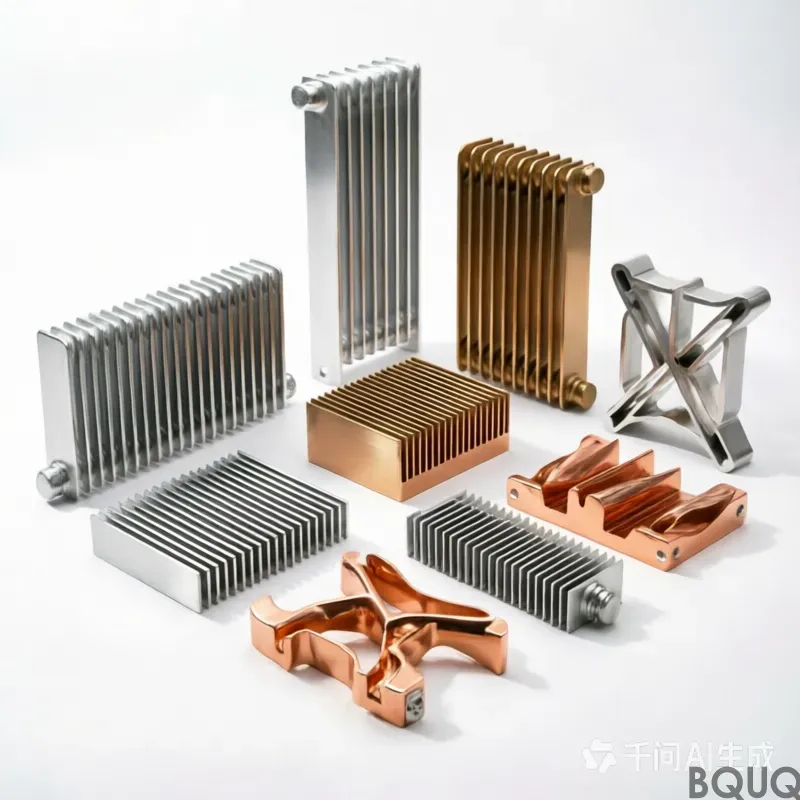
Fin density (number of fins per inch) and thickness significantly affect heat dissipation. Denser fins increase surface area but restrict airflow, leading to pressure drop. A typical air-cooled heat sink uses fin densities between 8-12 FPI (fins per inch). For natural convection, use wider spacing (4-8 FPI) to allow air movement. Fin thickness should be 0.5-1.5 mm; thinner fins save weight but may vibrate. Use computational fluid dynamics (CFD) to optimize fin geometry for your specific airflow conditions.

For forced convection, higher fin density can be effective if fan static pressure is sufficient. In contrast, for LED lighting or passive applications, larger gaps prevent boundary layer overlap. Always balance thermal performance with manufacturability—very thin or dense fins increase tooling costs and may cause tearing during stamping. Our CNC precision and stamping capabilities enable tight tolerances on fin spacing down to 0.2 mm.

2. Choose the Right Material

Aluminum (alloy 6063, 6061) is cost-effective with thermal conductivity ~200 W/mK. Copper (400 W/mK) offers better performance but is heavier and pricier. For compact electronics, copper heat sinks are preferred. For weight-sensitive applications, consider aluminum-copper hybrid designs. Also, thermal interface materials (TIMs) like graphite pads or thermal grease reduce contact resistance.

Surface treatment also matters: black anodizing increases emissivity for radiative heat transfer (up to 0.85), but only aids when temperature differences are >20°C. For high-power scenarios, nickel plating prevents corrosion. Our metal finishing services include anodizing, plating, and powder coating to enhance both thermal and environmental stability.

3. Enhance Surface Area with Pin Fins or Skived Fins

Traditional extruded straight fins are limited in aspect ratio. Pin fins (round, square, or elliptical) provide up to 30% more surface area per volume. Skived fins (cut from solid metal) offer continuous grain flow and high fin density with no air gaps. Bonded fins (folded or stamped) allow mixing materials, e.g., copper base with aluminum fins.

For extreme performance, consider sintered powder metal or additive manufacturing to create microchannels or lattice structures. However, such methods increase cost. Our stamping and CNC precision lathe services produce custom pin fin arrays and folded fin stacks cost-effectively for medium to high volumes.

4. Optimize Base Plate Thickness

The base plate spreads heat from the source to the fins. Too thin causes high thermal resistance; too thick adds weight and cost. General rule: base thickness should be 3-5 mm for aluminum, 2-4 mm for copper, but depends on heat source size. Use spreading resistance formulas or FEA to determine optimum thickness. A thicker base evens out temperature across the base, improving fin efficiency.

For multiple heat sources, consider vapor chamber or heat pipe embedded in base for superior spreading. Our heat pipe assembly service integrates phase-change cooling into custom heat sinks for high-power applications.

5. Improve Airflow with Ducting and Fan Placement

Even a well-finned heat sink fails without proper airflow. Ensure fans push air through the fin channels, not around them. Use shrouds or ducts to force air through the fins. For axial fans, maintain a gap of 2-5 mm between fan hub and fins to reduce noise and recirculation. For centrifugal blowers, use tapered ducts to match air velocity profile.

Orientation also matters: vertical fins with horizontal airflow (from fan) is typical. For natural convection, mount fins vertically to promote chimney effect. Our design consultation includes CFD analysis to optimize duct geometry and fan selection.

6. Reduce Contact Resistance with Proper TIM and Pressure

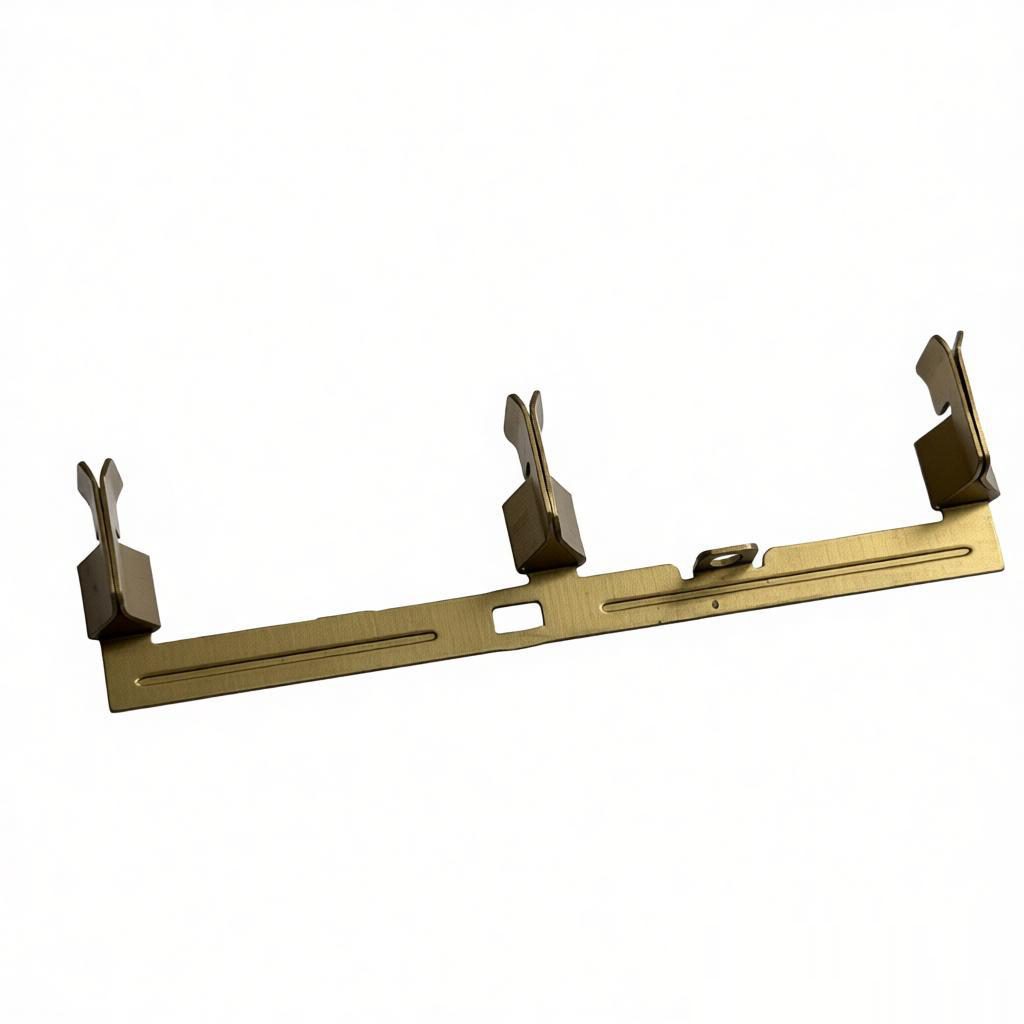
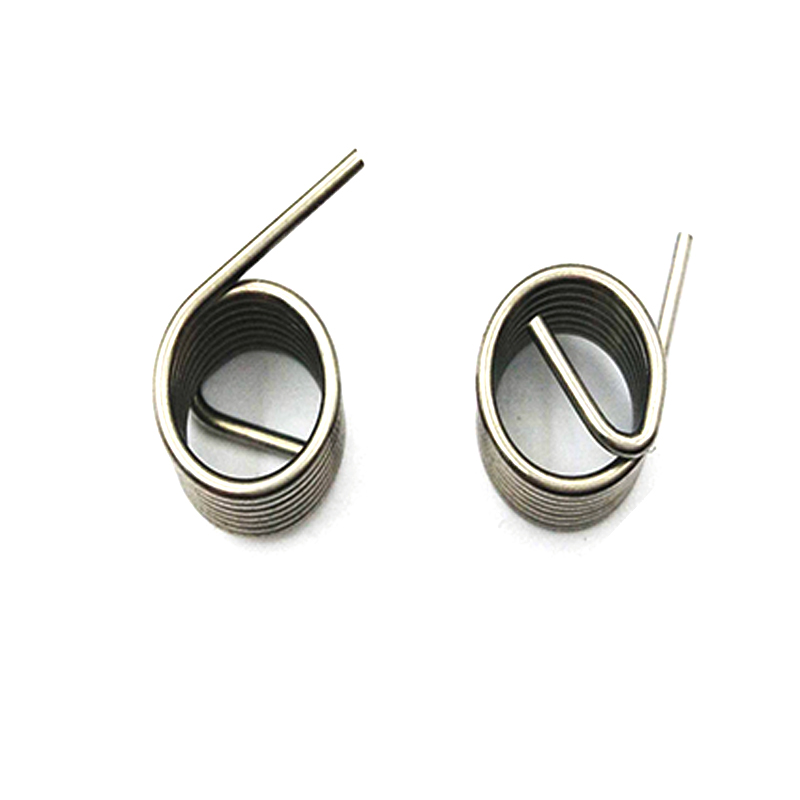
Gap between heat source and heat sink base causes large thermal resistance. Apply a thin, uniform layer of thermal grease (0.1-0.2 mm) or use phase-change pads. The contact pressure should be 10-30 psi for typical packages. Excessive pressure can crack components; too little leaves air gaps. Use spring-loaded screws or clips with specified torque.

For high-reliability applications, consider solder-attached or fully-brazed joints. Our CNC machining ensures flatness 5000 W/mK. They can be embedded in base plates or directly attached to fins. Vapor chambers act as planar heat pipes, ideal for spreading heat from multiple small hotspots.

Our manufacturing includes heat pipe flattening, bending, and stamping of heat sink bases with embedded grooves. We produce custom heat pipe assemblies with copper or aluminum shells, wicks, and working fluids (water, acetone, etc.) for harsh environments. This technology dramatically boosts thermal performance while keeping weight and size manageable.
Kontaktieren Sie uns für ein Angebot
Holen Sie sich ein Angebot
Wir verwenden Cookies, um Ihr Online-Erlebnis zu verbessern. Indem Sie auf dieser Website weitersurfen, stimmen Sie unserer Verwendung von Cookies zu.

Cookies

Bitte lesen Sie unsere Allgemeinen Geschäftsbedingungen und diese Richtlinie, bevor Sie auf unsere Dienste zugreifen oder sie nutzen. Wenn Sie mit dieser Richtlinie oder den Allgemeinen Geschäftsbedingungen nicht einverstanden sind, greifen Sie bitte nicht auf unsere Dienste zu und nutzen sie nicht. Wenn Sie sich in einer Gerichtsbarkeit außerhalb des Europäischen Wirtschaftsraums befinden, akzeptieren Sie durch die Nutzung unserer Dienste die Allgemeinen Geschäftsbedingungen und akzeptieren unsere in dieser Richtlinie beschriebenen Datenschutzpraktiken. Wir können diese Richtlinie jederzeit und ohne vorherige Ankündigung ändern, und Änderungen können für alle persönlichen Daten gelten, die wir bereits über Sie gespeichert haben, sowie für alle neuen persönlichen Daten, die nach der Änderung der Richtlinie erhoben wurden. Wenn wir Änderungen vornehmen, werden wir Sie benachrichtigen, indem wir das Datum am Anfang dieser Richtlinie ändern. Wir werden Sie im Voraus benachrichtigen, wenn wir wesentliche Änderungen an der Art und Weise vornehmen, wie wir Ihre persönlichen Daten erfassen, verwenden oder offenlegen, die Ihre Rechte gemäß dieser Richtlinie beeinträchtigen. Wenn Sie sich in einem anderen Land als dem Europäischen Wirtschaftsraum, dem Vereinigten Königreich oder der Schweiz (zusammen "Europäische Länder") befinden, bedeutet Ihr fortgesetzter Zugang oder Ihre Nutzung unserer Dienste nach Erhalt der Änderungsmitteilung, dass Sie die aktualisierte Richtlinie akzeptieren. Darüber hinaus können wir Ihnen Echtzeit-Offenlegungen oder zusätzliche Informationen über die Praktiken zur Verarbeitung personenbezogener Daten in bestimmten Teilen unserer Dienste zur Verfügung stellen. Solche Hinweise können diese Richtlinie ergänzen oder Ihnen zusätzliche Wahlmöglichkeiten bei der Verarbeitung Ihrer personenbezogenen Daten bieten.
CookiesCookies are small text files stored on your device when you access most Websites on the internet or open certain emails. Among other things, Cookies allow a Website to recognize your device and remember if you've been to the Website before. Examples of information collected by Cookies include your browser type and the address of the Website from which you arrived at our Website as well as IP address and clickstream behavior (that is the pages you view and the links you click).We use the term cookie to refer to Cookies and technologies that perform a similar function to Cookies (e.g., tags, pixels, web beacons, etc.). Cookies can be read by the originating Website on each subsequent visit and by any other Website that recognizes the cookie. The Website uses Cookies in order to make the Website easier to use, to support a better user experience, including the provision of information and functionality to you, as well as to provide us with information about how the Website is used so that we can make sure it is as up to date, relevant, and error free as we can. Cookies on the Website We use Cookies to personalize your experience when you visit the Site, uniquely identify your computer for security purposes, and enable us and our third-party service providers to serve ads on our behalf across the internet.We classify Cookies in the following categories: ●  Strictly Necessary Cookies ●  Performance Cookies ●  Functional Cookies ●  Targeting CookiesCookie ListA cookie is a small piece of data (text file) that a website – when visited by a user – asks your browser to store on your device in order to remember information about you, such as your language preference or login information. Those cookies are set by us and called first-party cookies. We also use third-party cookies – which are cookies from a domain different than the domain of the website you are visiting – for our advertising and marketing efforts. More specifically, we use cookies and other tracking technologies for the following purposes:Strictly Necessary CookiesThese cookies are necessary for the website to function and cannot be switched off in our systems. They are usually only set in response to actions made by you which amount to a request for services, such as setting your privacy preferences, logging in or filling in forms. You can set your browser to block or alert you about these cookies, but some parts of the site will not then work. These cookies do not store any personally identifiable information.Functional CookiesThese cookies enable the website to provide enhanced functionality and personalisation. They may be set by us or by third party providers whose services we have added to our pages. If you do not allow these cookies then some or all of these services may not function properly.Performance CookiesThese cookies allow us to count visits and traffic sources so we can measure and improve the performance of our site. They help us to know which pages are the most and least popular and see how visitors move around the site. All information these cookies collect is aggregated and therefore anonymous. If you do not allow these cookies we will not know when you have visited our site, and will not be able to monitor its performance.Targeting CookiesThese cookies may be set through our site by our advertising partners. They may be used by those companies to build a profile of your interests and show you relevant adverts on other sites. They do not store directly personal information, but are based on uniquely identifying your browser and internet device. If you do not allow these cookies, you will experience less targeted advertising.How To Turn Off CookiesYou can choose to restrict or block Cookies through your browser settings at any time. Please note that certain Cookies may be set as soon as you visit the Website, but you can remove them using your browser settings. However, please be aware that restricting or blocking Cookies set on the Website may impact the functionality or performance of the Website or prevent you from using certain services provided through the Website. It will also affect our ability to update the Website to cater for user preferences and improve performance. Cookies within Mobile ApplicationsWe only use Strictly Necessary Cookies on our mobile applications. These Cookies are critical to the functionality of our applications, so if you block or delete these Cookies you may not be able to use the application. These Cookies are not shared with any other application on your mobile device. We never use the Cookies from the mobile application to store personal information about you.If you have questions or concerns regarding any information in this Privacy Policy, please contact us by email at . You can also contact us via our customer service at our Site.