Heatpipes rechnen sich, wenn Wärme seitlich verteilt oder zu Kühlrippen transportiert werden muss. Vergleich von Leitfähigkeit, Kosten und Zuverlässigkeit. BQUQ (ISO9001, Dongguan) Angebot in 12 h.
Heatpipe vs. massiver Kühlkörper: Der Punkt, an dem sich Heatpipes rechnen
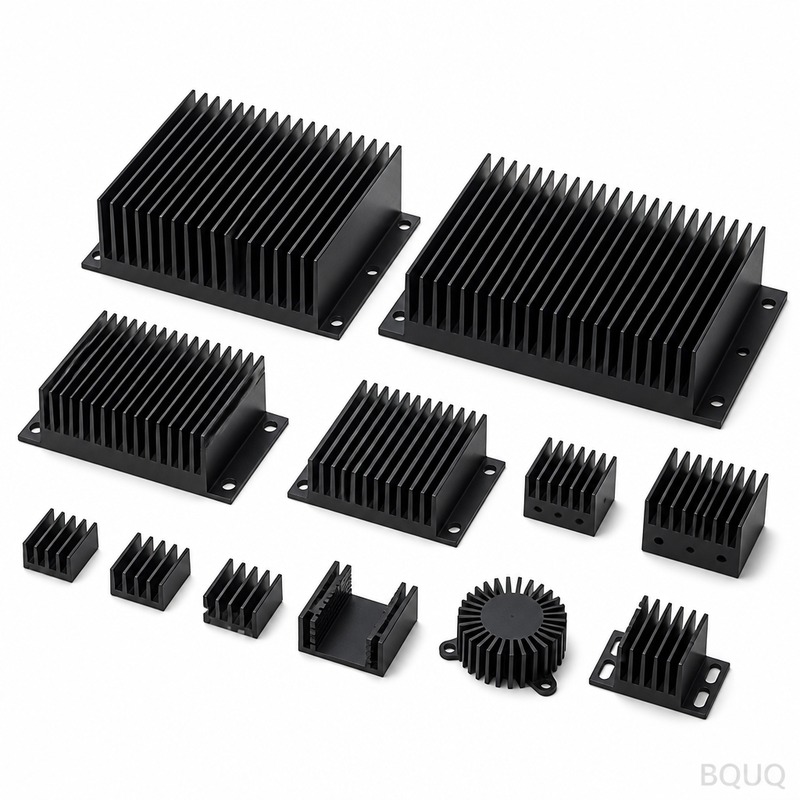
Eine Heatpipe rechnet sich, wenn das thermische Problem darin besteht, Wärme seitlich zu bewegen oder zu verteilen – nicht sie direkt nach oben abzuführen: Die Wärmequelle bedeckt weniger als etwa ein Viertel der Grundplatte, die Wärme muss mehr als 50–100 mm zurücklegen, um Rippen oder einen entfernten Kühler zu erreichen, oder der Luftstrom kann nur Rippen erreichen, die abseits der Quelle liegen. Wenn die Quelle bereits die Grundplatte ausfüllt und Luft direkt darüber strömt, kühlt ein massiver Kühlkörper aus Aluminium oder Kupfer genauso gut – zu geringeren Kosten und mit weniger Verbindungsstellen, die versagen können.
Heatpipes sind keine magischen Leiter; sie sind clevere Leiter. Sie transportieren Wärme durch Phasenwechsel – Dampf wandert, kondensiert, fließt durch den Docht zurück – daher ist ihre scheinbare Leitfähigkeit entlang der Achse enorm, aber sie gehorchen dennoch allen anderen Regeln der Wärmeübertragung an Verdampfer- und Kondensatorende. Dieser Leitfaden vergleicht sie mit massiven Kühlkörpern anhand der drei entscheidenden Achsen: thermische Leistung, Kosten und Zuverlässigkeit.
Was eine Heatpipe tatsächlich verändert
Eine massive Aluminiumbasis leitet seitlich mit etwa 200 W/m·K; Kupfer mit etwa 390 W/m·K. Eine Heatpipe transportiert Wärme axial mit einer effektiven Leitfähigkeit im Bereich von 5.000–200.000 W/m·K, abhängig von Durchmesser, Länge, Docht und Füllung – zwei bis drei Größenordnungen über Kupfer. Aber dieser Wert gilt nur entlang der Rohrachse und nur bis zur Transportkapazität der Heatpipe. Wird mehr Leistung zugeführt, als die Kapillar- oder Siedegrenzen erlauben, trocknet der Verdampfer aus; die Heatpipe wird vom Leiter zu einem warmen Kupferrohr.
| Material oder Bauteil | Effektive Leitfähigkeit (typ.) | Wofür es gut ist |
|---|---|---|
| 6063 Aluminium massiv | ~200 W/m·K | Günstige Verteilung über kurze Distanzen |
| Kupfer massiv | ~390 W/m·K | Verteilung und Wärmeleitung, hohe Kosten und Masse |
| 6 mm Heatpipe (axial) | ~5.000–50.000 W/m·K | Wärmetransport über 50–200 mm zu einem Rippenpaket |
| 8 mm Heatpipe (axial) | ~10.000–100.000 W/m·K | Höherer Leistungstransport pro Rohr |
| Vapor Chamber (planar) | ~5.000–20.000 W/m·K äquivalent | Verteilung über eine große flache Grundplatte |
Kernaussage: Heatpipes und Vapor Chambers sind Verteiler und Transporter, kein Ersatz für Rippen. Die Rippen geben die Wärme weiterhin mit derselben Konvektionsphysik an die Luft ab; die Heatpipe ermöglicht es lediglich, diese Rippen dorthin zu platzieren, wo die Luft tatsächlich strömt. Wenn ein solcher Transport nicht erforderlich ist, fügt die Heatpipe Kosten, Verbindungsstellen und Ausfallmodi hinzu, ohne die Kühlung zu verbessern.
Der Übergangspunkt in realen Produkten
Die Entscheidung ist zuerst geometrisch, dann thermisch. Stellen Sie sich einen 35 × 35 mm CPU-Die vor, der 150 W innerhalb einer 120 mm Kühler-Grundfläche abführt. Der Die bedeckt etwa 8 % der Grundplatte. Eine massive Aluminiumbasis, die dick genug ist, um 150 W über 120 mm ohne großen Temperaturabfall zu verteilen, wäre schwer und immer noch langsam; Kupfer würde funktionieren, aber mehr wiegen und kosten als eine Heatpipe-Baugruppe. Stellen Sie sich nun einen Leistungswiderstand von 50 × 50 mm auf einer 60 × 60 mm Grundplatte vor – die Quelle bedeckt den größten Teil der Grundplatte, die Luft erreicht die Rippen direkt darüber, und ein massives Strangpressprofil ist eindeutig die richtige Antwort.
| Anwendungsmuster | Massiver Kühlkörper | Heatpipe-Baugruppe |
|---|---|---|
| Quelle bedeckt den Großteil der Grundplatte, Luft erreicht Rippen darüber | Beste Wahl – geringste Kosten | Kein Vorteil, zusätzliche Kosten |
| Kleiner heißer Die, große Rippenfläche erforderlich (CPU/GPU-Klasse) | Dick, schwer, langsame Verteilung | Mehrere Heatpipes oder Vapor Chamber gewinnen |
| Wärme muss 100 mm+ zu einem entfernten Rippenpaket oder einer Gehäusewand transportiert werden | Ohne Wärmeverteiler unpraktisch | Heatpipe ist die Standardlösung |
| Versiegeltes Gehäuse, Wärme wird zu einer kühlen Wand transportiert | Dicke Kupferplatte möglich | Heatpipe zur Wandhalterung, kompakt |
| LED-Array auf einer langen schmalen Platine | Kupfer-Leiterplatte oder dicker Verteiler | Heatpipe entlang der Platine, ein Ende gekühlt |
Kernaussage: Der Übergangspunkt erscheint, wenn die Quellfläche im Verhältnis zur Kühlfläche klein ist oder wenn die Kühlfläche entfernt liegt. Faustregel aus der thermischen Praxis: Erwägen Sie Heatpipes, wenn der erforderliche laterale Transport etwa 50–100 mm überschreitet oder die Quelle weniger als ~25 % der Grundfläche ausmacht; erwägen Sie eine Vapor Chamber, wenn das Problem die Verteilung über eine breite flache Grundplatte ist und nicht der Wärmetransport in eine Richtung.
Kosten und Zuverlässigkeit: Der Teil, den niemand in die Broschüre schreibt
Ein massiver stranggepresster Kühlkörper ist ein einziges Stück Aluminium: keine Verbindungsstellen, kein Docht, keine Füllung, keine Orientierungsgrenzen. Eine Heatpipe-Baugruppe fügt die Heatpipes selbst, eine Basis mit Nuten, Löt- oder Hartlötverbindungen und einen Lieferanten hinzu, der die gesamte Unterbaugruppe kontrollieren muss. Vergleichen Sie das Ausfall- und Kostenprofil ehrlich, bevor Sie Heatpipes spezifizieren.
| Faktor | Massiver Aluminium-Kühlkörper | Heatpipe-Baugruppe |
|---|---|---|
| Teileanzahl | 1 (plus Klammern) | Basis + 2–6 Heatpipes + Wärmeleitmaterial + Klammern |
| Verbindungsstellen, die versagen können | Keine | Heatpipe-Basis-Verbindung, Rohrdichtungen |
| Orientierungsempfindlichkeit | Keine | Schwerkraft reduziert die Leistung; Docht-gegen-Schwerkraft-Orientierung vermeiden |
| Verhalten bei Frost/Überhitzung | Keines (Massivmetall) | Wasserfüllung kann den max./min. Temperaturbereich begrenzen |
| Typische Kosten | Am niedrigsten pro Teil | 1,5–4× eines massiven Kühlkörpers mit ähnlicher Hüllkurve |
| Thermische "Reserve" | Durch Geometrie festgelegt | Hoch, wenn Heatpipes unterdimensioniert sind – oder katastrophales Austrocknen |
Kernaussage: Der Preis einer Heatpipe-Baugruppe ist nicht nur die Heatpipe – es ist der Qualifizierungsaufwand. Jede Orientierung, jede Temperaturextrem und jeder Leistungstransient wird zu einem Testfall. Für ein Produkt, das in einer Orientierung, mit einem Leistungsniveau und einem moderaten Umgebungstemperaturbereich läuft, kann sich dieser Aufwand dennoch lohnen; für ein Allzweckprodukt erklärt er, warum so viele Kühler trotzdem Heatpipes verwenden: Das Verhältnis von Die-zu-Rippenfläche lässt bei der geforderten Leistung keine kostengünstigere Option zu.
Dimensionierung und Beschaffung von Heatpipe-Baugruppen
Wenn die Analyse auf Heatpipes hindeutet, dimensionieren Sie sie mit einem Budget pro Rohr: Eine 6 mm Heatpipe transportiert typischerweise etwa 30–60 W und eine 8 mm Heatpipe etwa 60–100 W bei den in der Elektronik üblichen Temperaturdifferenzen, wobei der genaue Wert durch Länge, Biegeanzahl und Orientierung bestimmt wird. Halten Sie Biegungen sanft (Radius über ~3× Rohrdurchmesser), vermeiden Sie ein Abflachen unter ~70 % des ursprünglichen Durchmessers am Verdampfer und testen Sie die ungünstigste Orientierung – ein Kühler, der im Labortest horizontal besteht, kann vertikal montiert mit Verdampfer über dem Kondensator 5–15 % verlieren. Die Basis, die die Heatpipes hält, ist oft ein bearbeitetes Teil mit enger Nutgeometrie, was Standardarbeit für CNC-gefräste Kühlkörper ist; die Beschaffung der Heatpipes, das Löten und die Füllmengenkontrolle gehören in der Regel zu einem Spezialisten für thermische Baugruppen. Wenn eine Zeichnung mit Heatpipes eintrifft, bitten Sie den Lieferanten, die Heatpipe-Spezifikation, die Verbindungsmethode und die Orientierungstestdaten anzugeben – diese drei Antworten zeigen Ihnen, ob die Baugruppe konstruiert oder nur zusammengesetzt wurde. Für die Seite des massiven Kühlkörpers im Vergleich bleiben stranggepresste Kühlkörper und bearbeitete Kupfer- oder Aluminiumplatten die Arbeitstiere, und der Leitfaden Aluminium vs. Kupfer Kühlkörper behandelt, wann ein Upgrade des Grundmetalls der klügere Schritt ist als das Hinzufügen von Heatpipes.
Häufig gestellte Fragen
F: Wann ist eine Heatpipe besser als ein massiver Kühlkörper?
A: Wenn Wärme von einer kleinen Quelle über eine große Grundplatte verteilt werden muss oder mehr als etwa 50–100 mm zurücklegen muss, um Rippen oder eine gekühlte Wand zu erreichen. Wenn die Quelle bereits den Großteil der Grundplatte bedeckt und Luft die Rippen darüber erreicht, kühlt ein massiver Aluminium-Kühlkörper bei geringeren Kosten genauso gut.
F: Wie viel Wärme kann eine einzelne Heatpipe transportieren?
A: Als grobe Dimensionierungsgröße transportiert eine 6 mm Heatpipe etwa 30–60 W und eine 8 mm Heatpipe etwa 60–100 W bei typischen Elektronik-Temperaturdifferenzen. Die genaue Kapazität hängt von Länge, Biegungen, Dochttyp, Orientierung und Betriebstemperatur ab – bestätigen Sie dies immer mit den Daten des Heatpipe-Herstellers.
F: Sind Heatpipe-Kühler langfristig zuverlässig?
A: Ja, wenn die Heatpipe innerhalb ihres Betriebsbereichs arbeitet und die Verbindung solide ist – Millionen von Laptops und Servern laufen jahrelang damit. Die Risiken sind Austrocknen durch Überschreiten der Transportkapazität, Leistungsverlust bei ungünstiger Orientierung und schlechte Heatpipe-Basis-Verbindung; alle drei werden durch Tests erkannt.
F: Warum ist mein Heatpipe-Kühler vertikal montiert schlechter?
A: Die Orientierung verändert, wie das Arbeitsmedium durch den Docht zurückfließt. Bei Verdampfer unterhalb des Kondensators unterstützt die Schwerkraft den Rückfluss; bei Verdampfer oberhalb kämpft der Docht gegen die Schwerkraft und die Kapazität sinkt, typischerweise um 5–15 % oder mehr. Testen Sie die tatsächliche Montageorientierung.
F: Benötige ich Kupferrippen mit Heatpipes?
A: Normalerweise nicht. Die Heatpipe transportiert die Wärme zum Rippenpaket, sodass Aluminiumrippen sie fast so gut an die Luft abgeben wie Kupfer – bei einem Bruchteil von Gewicht und Kosten. Kupferrippen rechtfertigen ihren Aufpreis hauptsächlich dort, wo das Rippenpaket selbst auch Wärme seitlich verteilen muss, wie bei sehr dichten Anordnungen.
Verwandte Artikel
- aluminum-vs-copper-heat-sinks – Mehr aus der BQUQ Thermal Management Engineering-Serie.
- heat-sink-fin-design-guidelines – Mehr aus der BQUQ Thermal Management Engineering-Serie.
- air-cooling-vs-liquid-cooling-electronics – Mehr aus der BQUQ Thermal Management Engineering-Serie.
Verwandte Ressourcen
- Über BQUQ: eine ISO9001-zertifizierte Quellfabrik in Dongguan mit vier Produktionslinien unter einem Dach.
- Kühlkörper und thermische Teile: stranggepresste, CNC-gefräste und gestanzte Optionen aus der Thermik-Linie – stranggepresste Kühlkörper, CNC-gefräste Kühlkörper, gestanzte Kühlkörper.
- Branchentrends: Analysen zu Fertigung, Materialmarkt und Beschaffung für Käufer.
- Technische Artikel: Engineering-Leitfäden und Prozessvergleiche – mehr, wo dieser Artikel herkommt.
- FAQ-Hub: Schnelle Antworten zu CNC, Stanzen, Federn und Kühlkörpern.
- Fallstudien: Reale Teile und reale Zahlen aus Projekten, die wir entwickelt und geliefert haben.
- Kontaktieren Sie uns: Senden Sie Ihre Zeichnung und erhalten Sie ein Angebot innerhalb von 12 Arbeitsstunden.
Verfasst vom BQUQ Engineering-Team. BQUQ ist eine ISO9001-zertifizierte Quellfabrik in Dongguan, China, mit CNC-Bearbeitung, Metallstanzen, kundenspezifischen Federn, Kühlkörper- und Spannzangen-Linien unter einem Dach. Senden Sie Zeichnungen an sc@bquq.com oder WhatsApp +86 13713157787 für ein Angebot innerhalb von 12 Arbeitsstunden. www.bquq.com