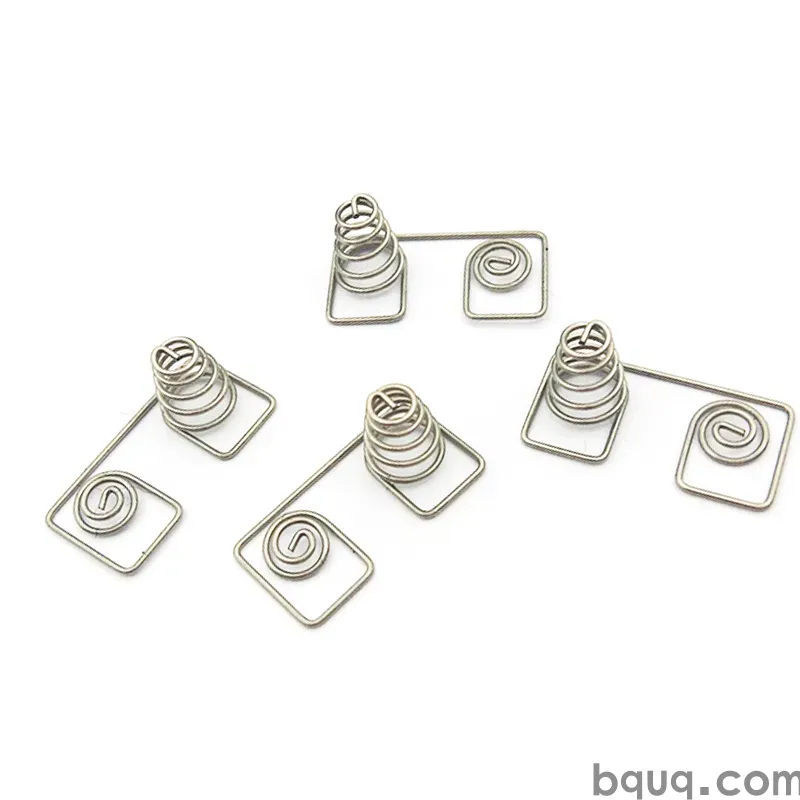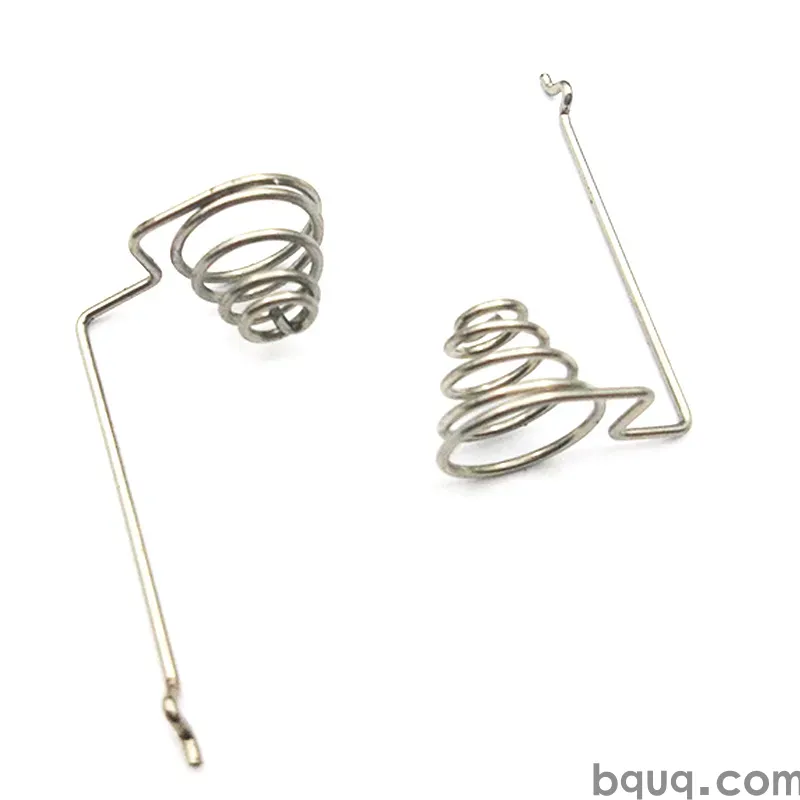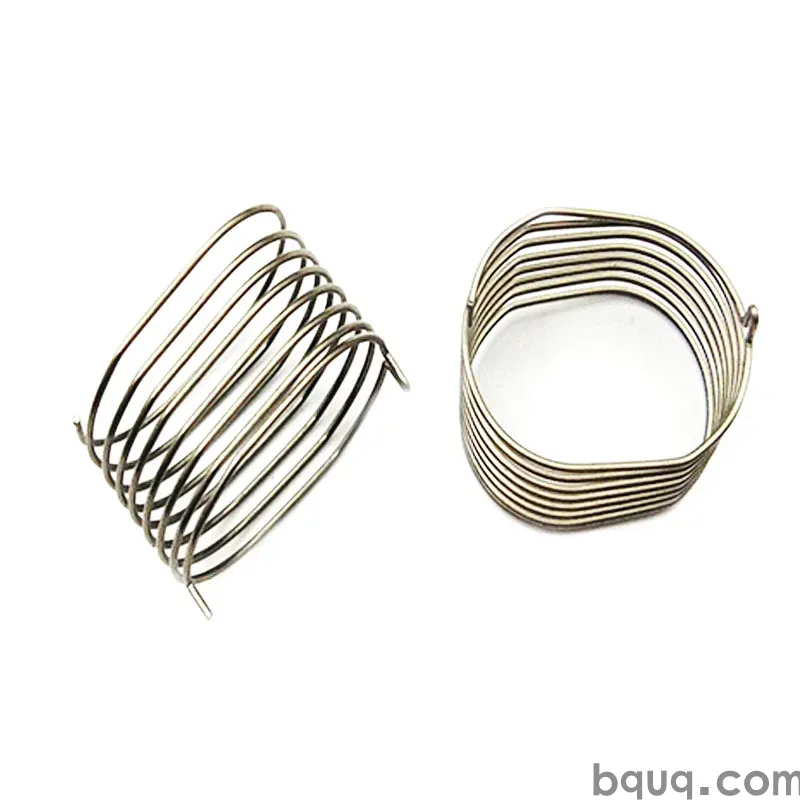
Kontaktfedern: Normalkraft, Widerstand und Beschichtung bestimmen die Zuverlässigkeit. Legierungen und Oberflächen im Vergleich. BQUQ (ISO9001) fertigt sie, Angebote in 12 Stunden.
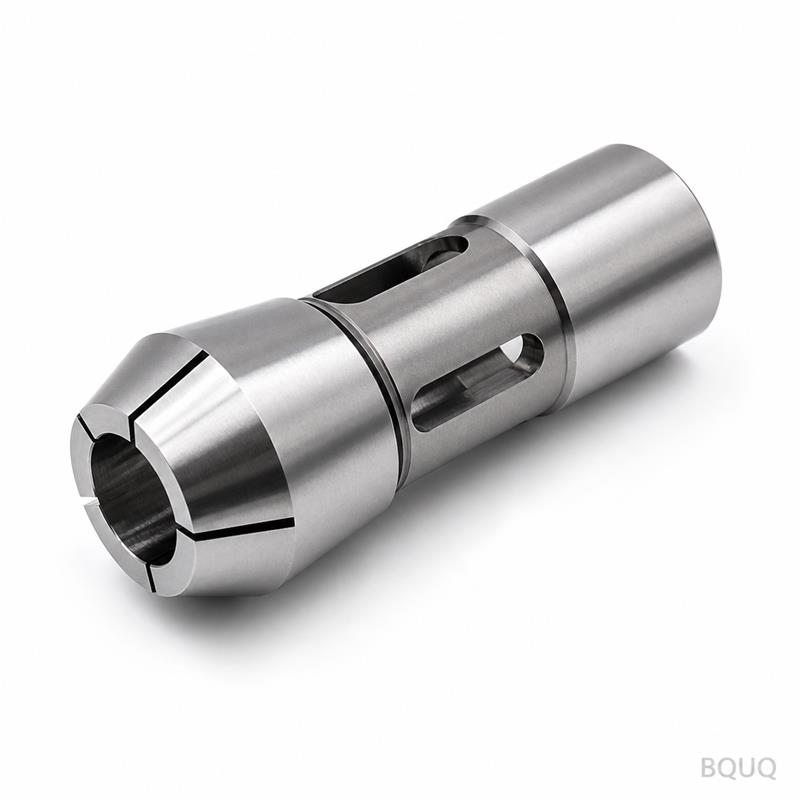
Kontaktfedern für die Elektronik: Kraft, Lebensdauer und Beschichtung, die zählen
Eine Kontaktfeder in der Elektronik wird an drei Zahlen gemessen: Normalkraft am Kontaktpunkt (üblicherweise 30–150 gf für Signalkontakte), Kontaktwiderstand (Milliohm, nicht Ohm) und Lebensdauer (10.000 bis 100.000+ Zyklen). Das Material – Berylliumkupfer, Phosphorbronze oder Edelstahl – bestimmt die Kraft, die ohne bleibende Verformung gehalten werden kann, und die Beschichtung – Gold über Nickel für Signale, Zinn für kostengünstigere Stromkontakte – bestimmt die Stabilität des Widerstands über die Zeit.
Ingenieure spezifizieren Kontaktfedern, als wären es gewöhnliche Federn, und wundern sich dann, warum ein Steckverbinder im Feld ausfällt. Der Unterschied: Eine gewöhnliche Feder muss nur etwas drücken; eine Kontaktfeder muss etwas drücken und dabei Strom durch die Kontaktfläche leiten, in feuchter oder korrosiver Atmosphäre, über zehntausende von Steckzyklen. Das verändert Material, Oberfläche und Versagensmechanismus vollständig. Kraft, Lebensdauer und Beschichtung sind keine drei getrennten Entscheidungen – sie interagieren über die Kontaktgrenzfläche.
Normalkraft: Die Zahl, an der alles hängt
Der Kontaktwiderstand wird durch die tatsächliche Fläche des Metall-zu-Metall-Kontakts bestimmt, und diese Fläche wird durch Kraft erzeugt. Unterhalb von etwa 20–30 gf Normalkraft wird der Widerstand eines Kontakts instabil – Staub, Oxid und Mikrorauheit dominieren und die Verbindung flackert. Oberhalb von etwa 150–200 gf multipliziert sich die Einsteckkraft über viele Kontakte und das Gegenstück verschleißt. Konstrukteure wählen eine Normalkraft im nutzbaren Bereich und verifizieren dann, dass sie über die Toleranzkette und die Lebensdauer gehalten wird.
| Anwendung | Typische Normalkraft | Typisches Lebensdauerziel |
|---|---|---|
| Signalkontakte, Steckverbinder | 30–100 gf | 10.000–50.000 Zyklen |
| SIM-/Speicherkartenkontakte | 40–80 gf | 5.000–10.000 Zyklen |
| Strom-/Batteriekontakte | 150–500 gf | 5.000–20.000 Zyklen |
| Testsockel, hochzyklisch | 50–150 gf | 100.000+ Zyklen |
| Relais-/Schaltkontakte | 30–120 gf | 100.000–1.000.000 Zyklen |
Typische Bereiche für kommerzielle Elektronik; Automobil- und Militärteile liegen höher und länger. Fazit: Wählen Sie den Kraftbereich basierend auf Strom, Umgebung und Zyklusziel und prüfen Sie dann, ob die Feder diese Kraft an den Extremen der Fertigungstoleranz hält. Ein Kontakt, der auf dem Papier 40 gf liefert, aber am unteren Toleranzende nur 15 gf, ist ein intermittierender Ausfall, der auf einen Feldbericht wartet. Belastungstests an Produktionsteilen bei Arbeitsdurchbiegung, nicht nur im unbelasteten Zustand.
Materialien: Kraftrückhalt ist die eigentliche Spezifikation
Die Materialwahl für Kontaktfedern ist ein Kampf zwischen Leitfähigkeit, Festigkeit und Kosten. Das Material muss als Feder wirken – Kraft liefern, ohne über die Lebensdauer eine bleibende Verformung zu erleiden – und als Leiter. Festigkeit und Leitfähigkeit ziehen in entgegengesetzte Richtungen, weshalb die Industrie immer wieder zu denselben drei Legierungen zurückkehrt.
| Material | Leitfähigkeit (% IACS) | Fließverhalten | Typische Verwendung |
|---|---|---|---|
| Berylliumkupfer C17200 | 20–25% | Höchste Festigkeit, hält Kraft bei hoher Temperatur | Präzisionskontakte, hochzyklisch |
| Phosphorbronze C5210 | 15–20% | Gute Festigkeit, geringe Kosten, kaltverfestigend | Allgemeine Steckverbinder, Federn |
| Edelstahl 301 (Federhärte) | ~2–3% | Fest, korrosionsbeständig, geringe Leitfähigkeit | Federarme in korrosiven Umgebungen |
| Messing (Federhärte) | ~25–28% | Schwach als Feder, billig | Nur für Kontakte mit geringer Kraft |
| Titankupfer | 15–20% | Hohe Festigkeit, bessere Leitfähigkeit als BeCu | Stromkontakte für höhere Temperaturen |
Fazit: Berylliumkupfer ist der Maßstab, weil es die höchste Biegespannung ohne bleibende Verformung hält, was kleinere Kontakte bei gleicher Kraft bedeutet. Phosphorbronze ist die preiswerte Wahl, wenn der Bauraum einen größeren Querschnitt zulässt. Edelstahl ist für Korrosion gedacht, nicht für Leitfähigkeit – wenn Sie ihn wählen, planen Sie einen beschichteten Strompfad. Bei hohen Betriebstemperaturen widerstehen Titankupfer und Berylliumkupfer der Relaxation besser als Phosphorbronze. Wenn der Kontakt aus Bandmaterial gestanzt und geformt wird, entscheiden Kornrichtung und Biegeradius relativ zur Walzrichtung des Bandes, ob die Biegung reißt oder die Kraft gehalten wird – ein Matrizenkonstruktionsproblem, kein Chemieproblem.
Beschichtung: Wo der Strom tatsächlich fließt
Blankes Metall oxidiert; die Beschichtung dient dazu, eine Oberfläche mit niedrigem Widerstand zu erhalten. Eine Nickelschicht als Unterlage verhindert Kupfermigration und bietet eine Basis; die Deckschicht trägt die Kontaktgrenzfläche. Gold für Signalkontakte, Zinn für kostensensible Stromkontakte, und die Dicke ist ebenso eine Entscheidung über die Lebensdauer wie über die Kosten.
| Beschichtungssystem | Typische Dicke | Am besten geeignet für | Zu beachtende Versagensart |
|---|---|---|---|
| Gold-Flash über Nickel | 0,05–0,2 µm Au | Niedrigzyklische, kostengünstige Signale | Porosität → Korrosion an dünnen Stellen |
| Hartgold über Nickel | 0,4–1,5 µm Au | Hochzyklische Gleitkontakte | Durchscheuern bei hohen Zyklenzahlen |
| Selektivgold | 0,4–1,5 µm Au, lokalisiert | Kontakte mit Gold nur dort, wo nötig | Platzierungsgenauigkeit |
| Zinn oder Zinn-Blei | 1–5 µm | Stromkontakte, Batterieklemmen | Fretting-Korrosion bei Bewegung |
| Silber | 1–3 µm | Hoher Strom, niedrige Spannung | Anlaufen in schwefelhaltiger Atmosphäre |
Fazit: Die Dicke ist ein Lebensdauerbudget. Ein Kontakt mit 0,05 µm Gold-Flash kann den elektrischen Test heute bestehen und in 6 Monaten feuchter Lagerung durchkorrodieren; Hartgold mit 0,5–1 µm auf der Verschleißspur ist das, was 10.000+ Zyklen trägt. Zinnkontakte sind billig und für Strom gut geeignet, aber Zinn neigt zu Fretting – Mikrobewegung zerreibt Oxid und der Widerstand steigt – daher dürfen Zinnkontakte nicht für Vibration oder thermische Wechselbewegung ausgelegt werden. Was auch immer die Beschichtung ist, die Oberfläche des Grundmetalls vor der Beschichtung ist wichtiger als die Beschichtung selbst: Eine raue, kontaminierte Oberfläche beschichtet porös. Eine gute Fabrik kontrolliert die Oberfläche vor der Beschichtung und testet den Kontaktwiderstand nach dem Beschichten und endgültigen Formen, da das Formen nach der Beschichtung die Schicht an der Biegung reißen lassen kann.
Lebensdauertests: Was "100.000 Zyklen" auf dem Papier bedeutet
Zykluslebensdauerangaben bedeuten nichts ohne die Testbedingungen: den Durchbiegungsbereich (volle Bewegung verschleißt am schnellsten), die Normalkraft beim Test, das Material der Gegenfläche und ob der Test trocken oder mit Strom durchgeführt wird. Ein Kontakt, der bei 0,3 mm Bewegung getestet wurde, kann bei 1 mm versagen. Die Standardpraxis besteht darin, die Lebensdauer als die Zyklenzahl bis zu einem definierten Endpunkt zu definieren – einem Widerstandsschwellenwert (z. B. Verdopplung des Anfangswiderstands oder Überschreiten von 100 mΩ) oder einem Kraftverlust (z. B. 30% unter der anfänglichen Normalkraft). Fragen Sie nach der Endpunktdefinition, wenn ein Lieferant eine Zyklenzahl nennt.
Die praktische Verifikationsschleife für eine neue Kontaktfeder ist: Prototyp fertigen und Kraft bei Arbeitshöhe über die Toleranzecken messen, einen Einsteck- oder Durchbiegungslebensdauertest bis zum vereinbarten Endpunkt durchführen und dann Kontaktwiderstand und Kraftrückhalt an den Überlebenden prüfen. Die Chargenkontrolle wiederholt die Kraft- und Widerstandsprüfungen an Produktionsteilen – die Federprüfroutine, die eine Drahtdurchmesserabweichung erkennt, bevor sie zum Feldausfall wird.
BQUQ fertigt Kontaktfedern unter ISO9001 in Dongguan, mit Federwickeln neben Metallstanzen in derselben Fabrik, was Kraft und Form konsistent hält, ob der Kontakt gewickelt oder ein gestanztes und geformtes Verbundfederteil ist. Gewickelte Kontaktfedern laufen auf der Druckfederlinie; Torsionsarme auf der Torsionsfederlinie. Senden Sie die Zeichnung mit Kraftbereich, Zyklusziel und Beschichtungsspezifikation an sc@bquq.com oder WhatsApp +86 13713157787 für ein Angebot innerhalb von 12 Arbeitsstunden und fordern Sie den Lebensdauer-Testbericht der Muster vor der Produktion an.
F: Was ist die minimale Normalkraft für einen zuverlässigen Kontakt?
Halten Sie für signalniveau-trockene Schaltungen die Normalkraft über 30 gf; darunter machen Staub und Oxidfilme den Widerstand instabil. Stromkontakte mit höheren Strömen benötigen im Allgemeinen 150 gf oder mehr, um unter Vibration einen niedrigen und stabilen Widerstand zu halten.
F: Berylliumkupfer oder Phosphorbronze für meine Kontaktfeder?
Verwenden Sie Berylliumkupfer, wenn der Bauraum eng ist, die Kraft hoch oder die Temperatur erhöht ist – es hält die höchste Biegespannung ohne bleibende Verformung. Verwenden Sie Phosphorbronze, wenn die Kosten wichtig sind und ein größerer Querschnitt akzeptabel ist. Beide sind branchenübliche Legierungen für Kontaktfedern.
F: Wie dick sollte die Goldbeschichtung auf einer Kontaktfeder sein?
Für den niedrigzyklischen Signaleinsatz sind 0,05–0,2 µm Gold-Flash über Nickel üblich, aber porositätsbegrenzt; für hochzyklische Gleitkontakte spezifizieren Sie 0,4–1,5 µm Hartgold auf der Verschleißfläche. Dickeres Gold erkauft Zyklen – passen Sie es an das Lebensdauerziel an, nicht an das Budget.
F: Warum versagt mein verzinntes Kontaktteil in einem vibrierenden Produkt?
Fretting-Korrosion. Mikrobewegung zwischen Zinnoberflächen zerreibt das Oxid und der Kontaktwiderstand steigt. Zinn benötigt eine stabile, unbewegte Grenzfläche; für vibrierende oder thermisch wechselnde Verbindungen verwenden Sie Gold über Nickel oder konstruieren Sie eine Wischbewegung in den Kontakt.
F: Kann BQUQ eine Kontaktfeder herstellen, die sowohl gewickelt als auch beschichtet ist?
Ja. Wir wickeln oder stanzen den Kontakt, arrangieren die Beschichtung nach Ihrer Spezifikation (selektiv oder vollflächig, Gold, Zinn, Nickel oder Silber) und testen das fertige Teil unter Last. Da Feder- und Stanzlinien eine ISO9001-Fabrik teilen, werden Kraft, Form und Oberfläche an einem Ort kontrolliert.
Verfasst vom BQUQ Engineering Team. BQUQ ist eine ISO9001-zertifizierte Quellenfabrik in Dongguan, China, die CNC-Bearbeitung, Metallstanzen, kundenspezifische Federn, Kühlkörper- und Spannzangenlinien unter einem Dach betreibt. Senden Sie Zeichnungen an sc@bquq.com oder WhatsApp +86 13713157787 für ein Angebot innerhalb von 12 Arbeitsstunden. www.bquq.com